Thirty-seven portfolios.
One designer.
Each card opens a fully working, self-contained HTML page. No build step, no dependencies. Click to enter.
New: four designs by GPT-6 Astra ↗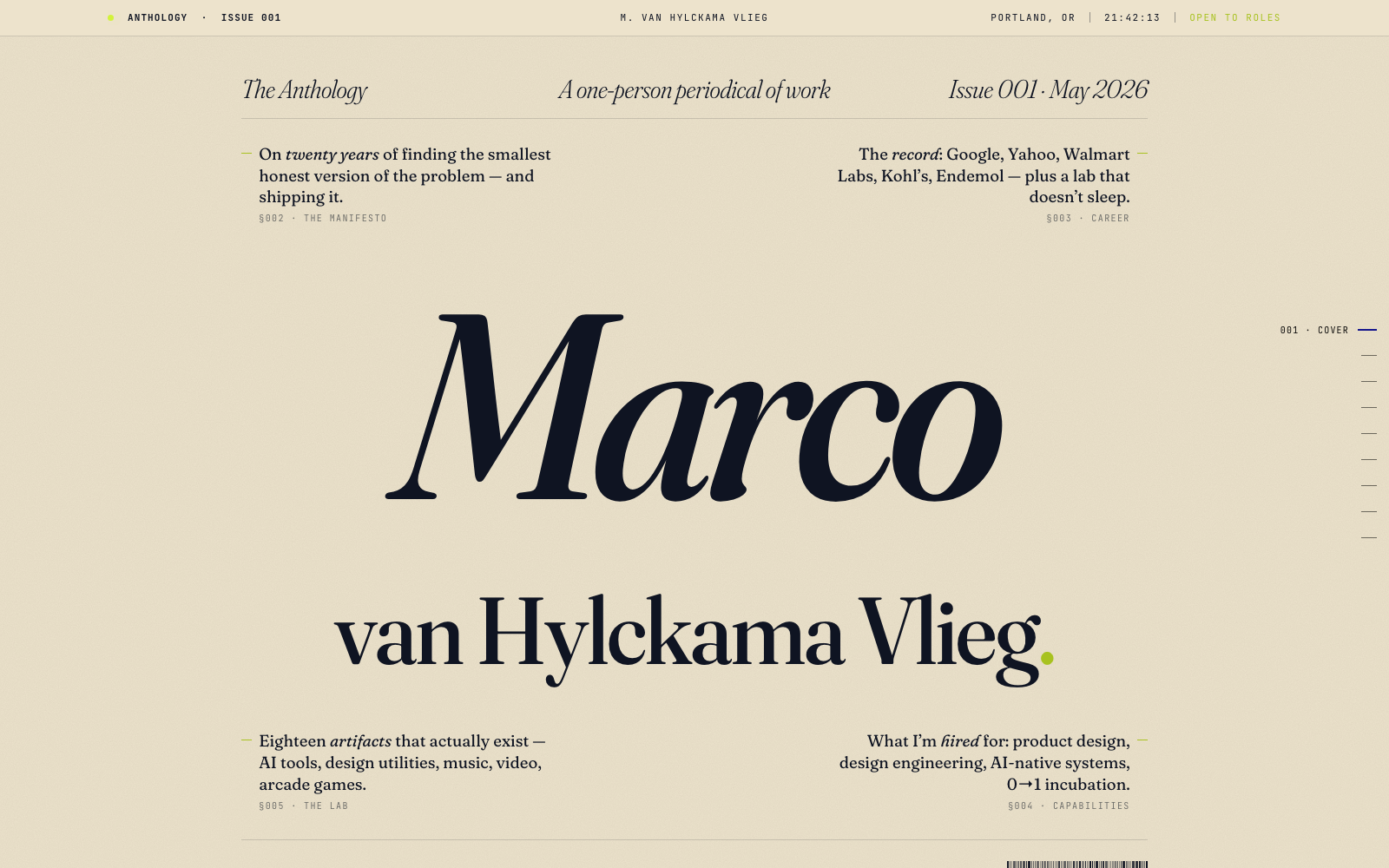
The Anthology.
A printed periodical of work. Magazine cover, running heads, colophon, variable-font reactive typography.
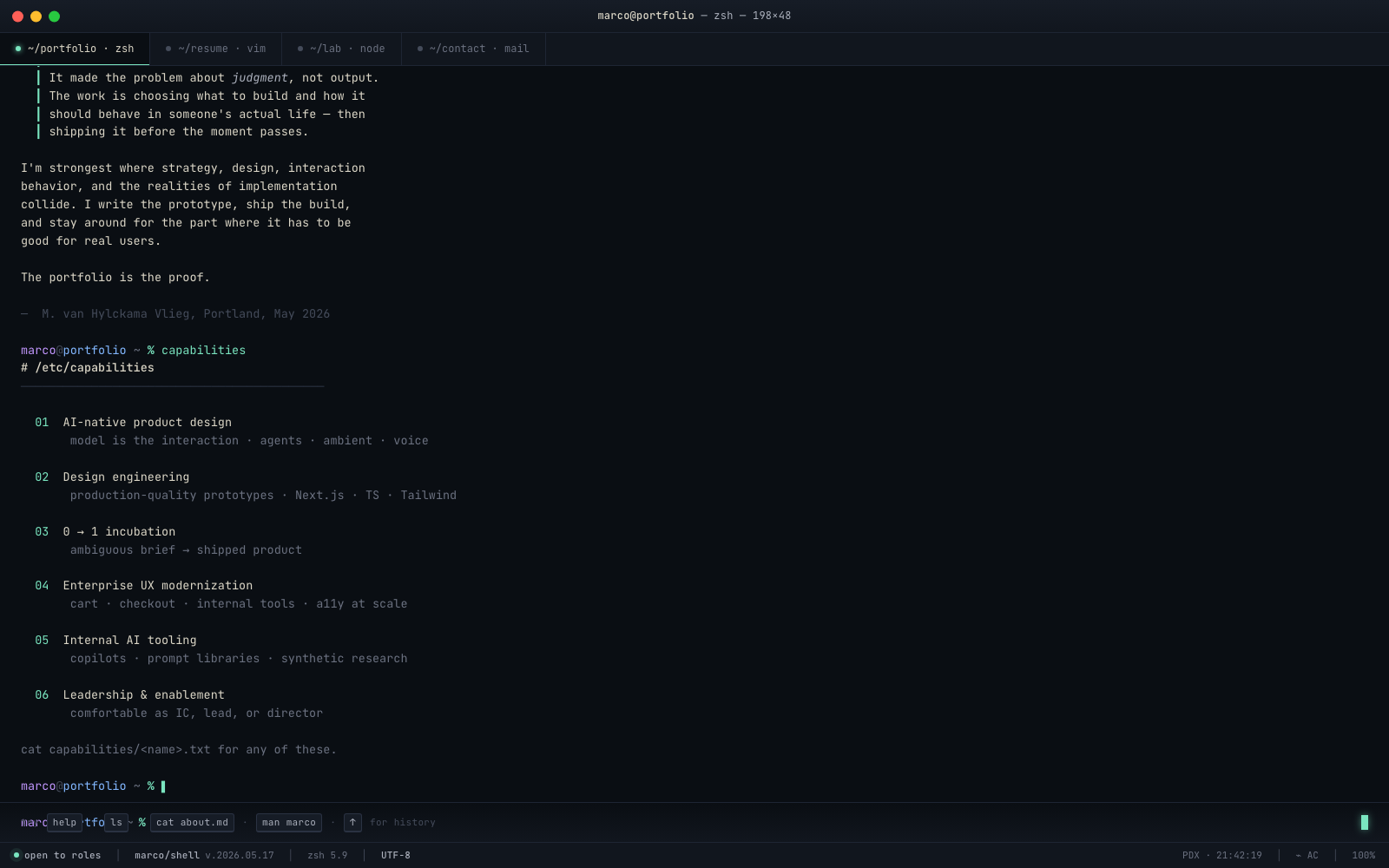
Marco/Shell.
A real interactive terminal. Type help, ls, cat about.md, man marco, sudo hire-me.
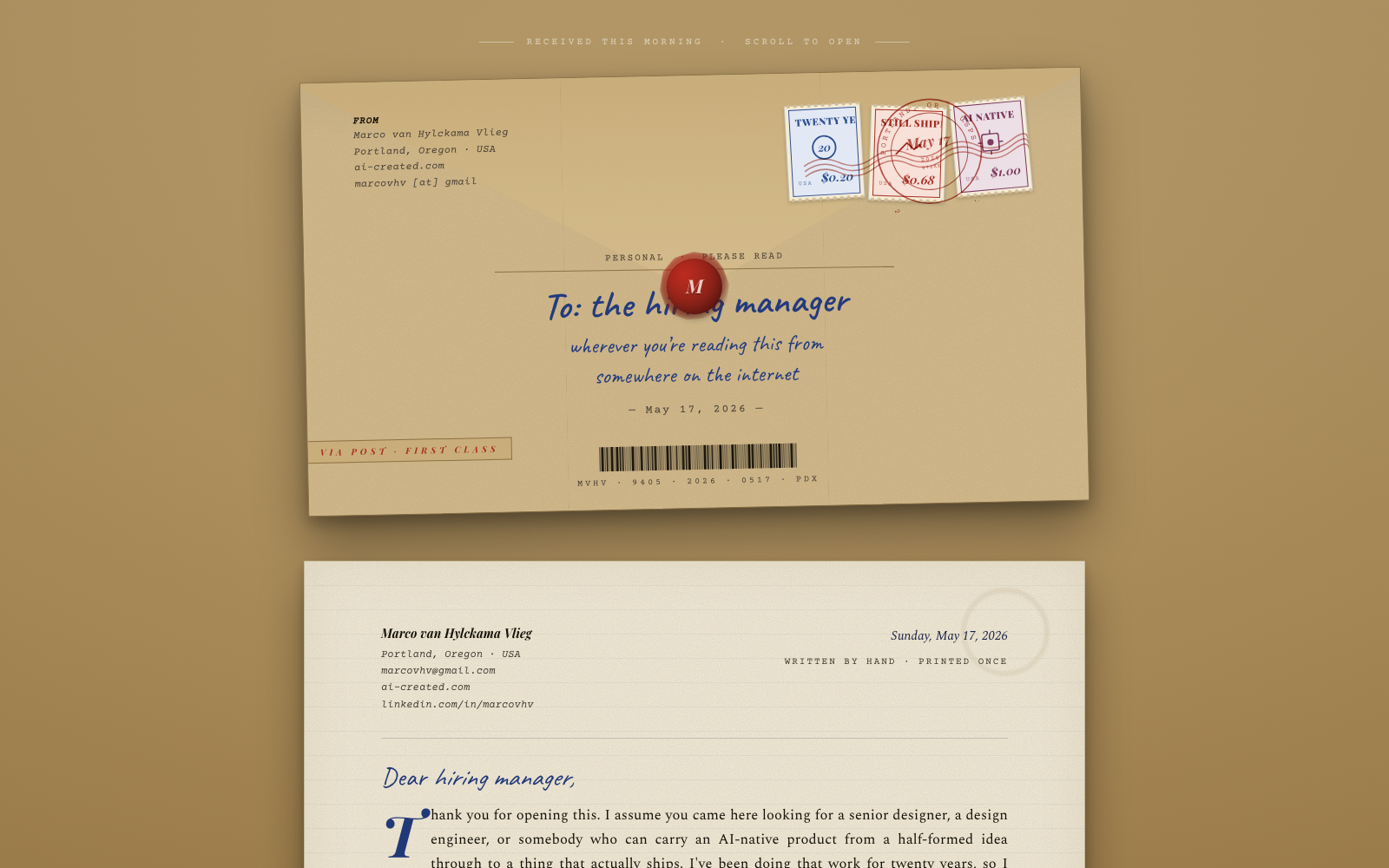
A letter from Marco.
A piece of physical mail. Envelope with SVG stamps, wax seal, postmark, polaroids, contact sheet, index card.
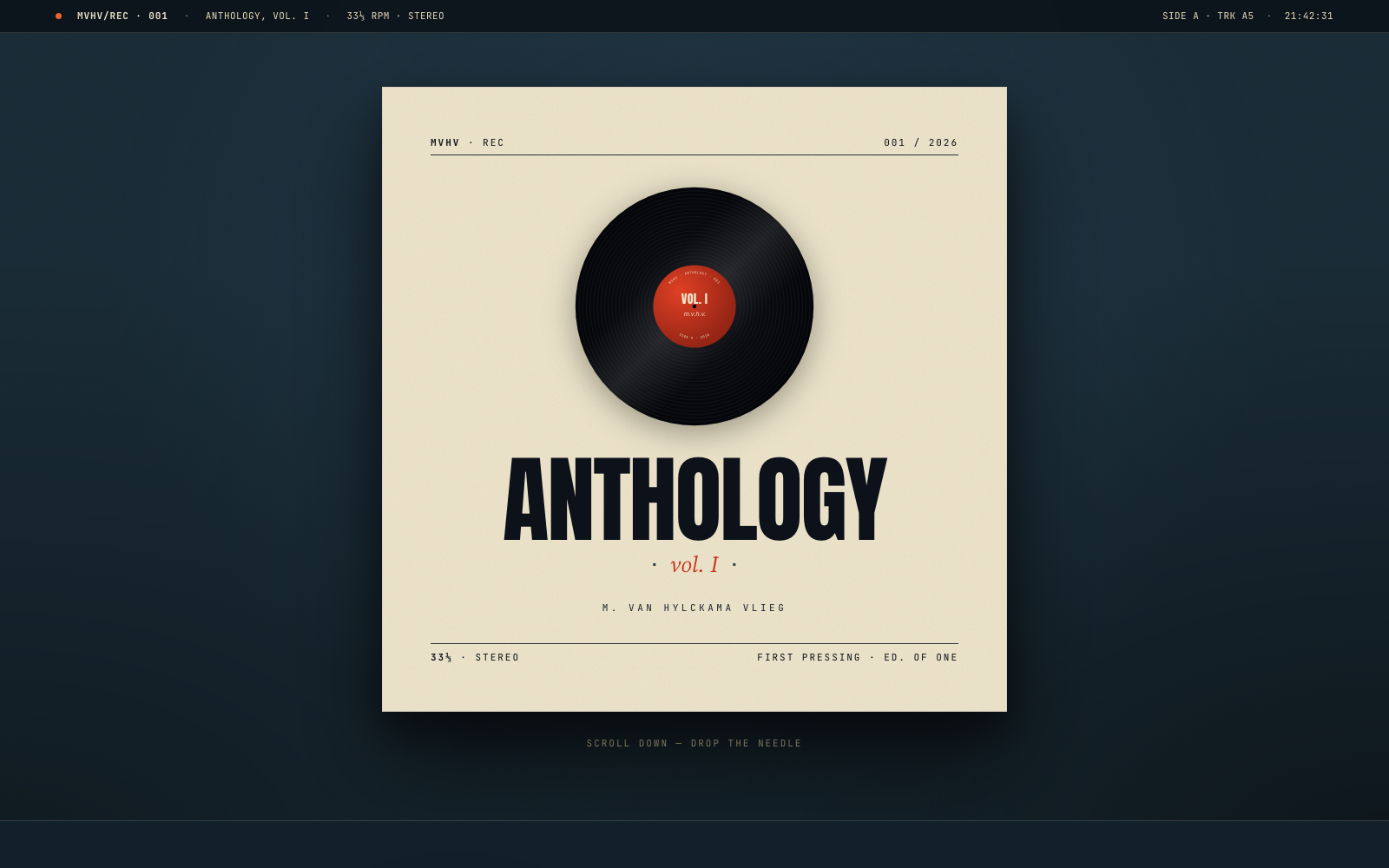
Anthology, Vol. I.
A vinyl record. Cover, spinning disc with tonearm tracking, Side A career, Side B lab, liner notes, label closeup.
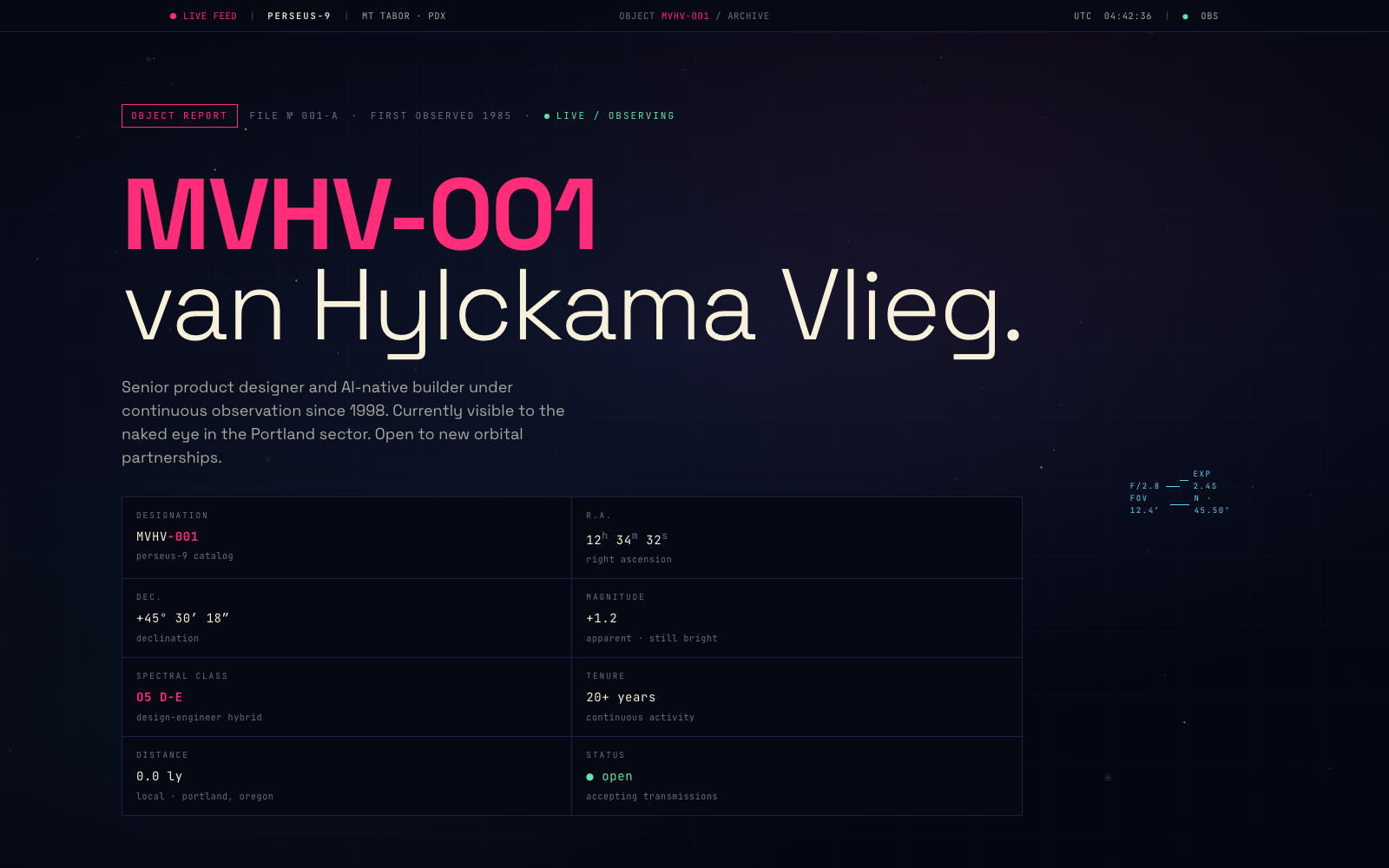
Object MVHV-001.
An astronomical observation. Telescope view, career as a constellation, spectroscopic capabilities, orbital lab bodies.
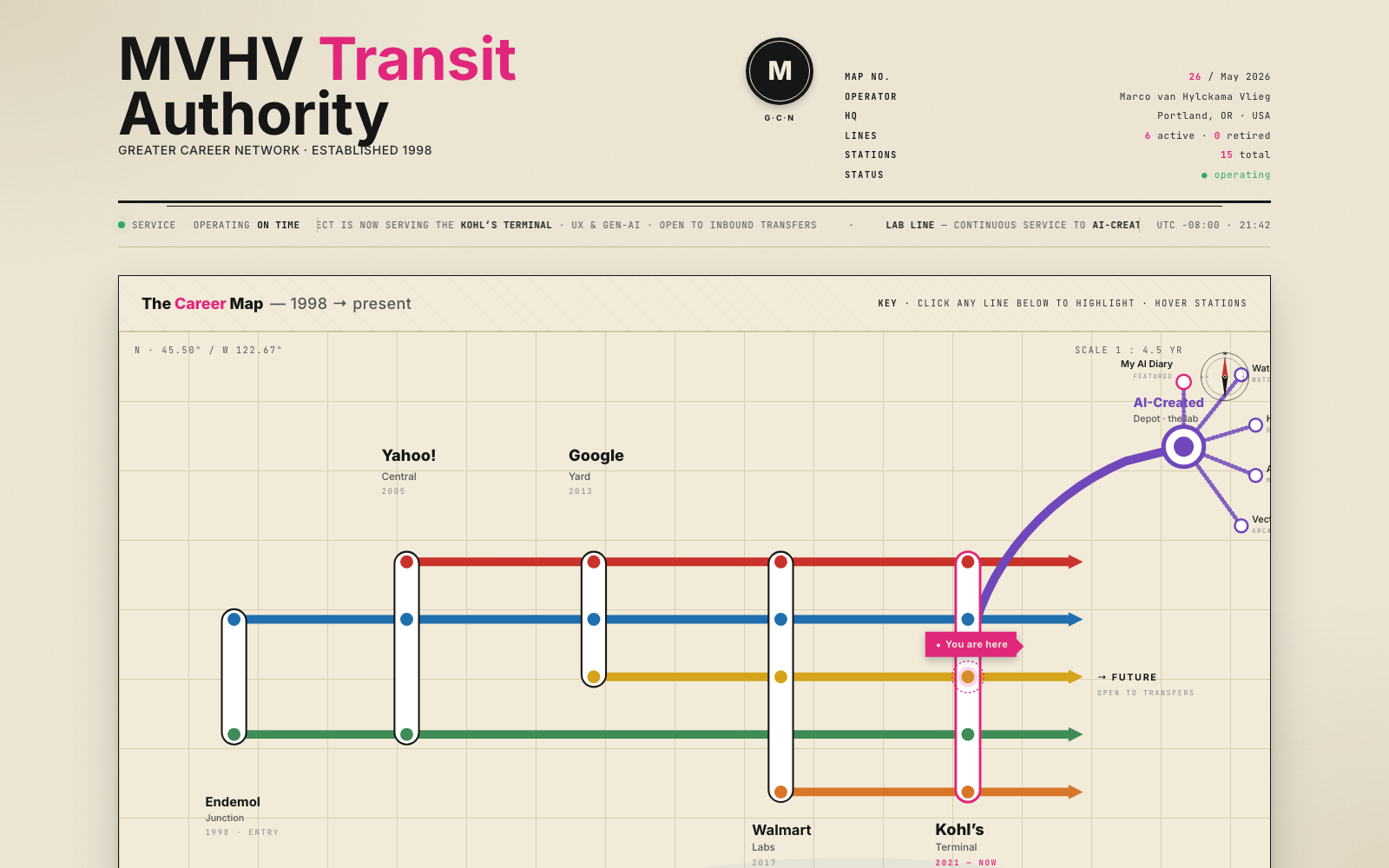
MVHV Transit.
A Vignelli/Beck transit map. Six colored lines, fifteen stations, project termini, line filtering, station tooltips.
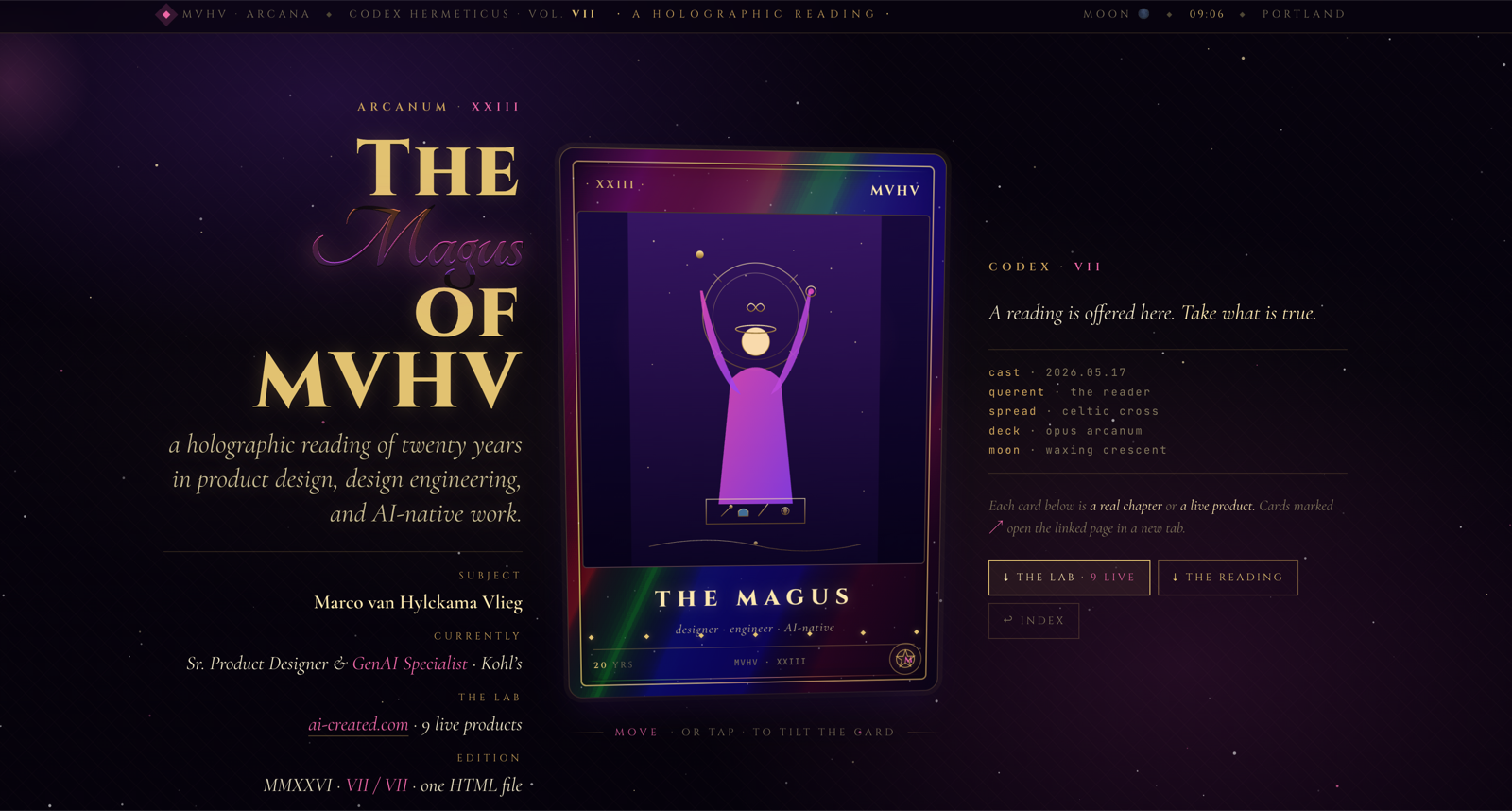
MVHV Arcana.
A holographic tarot reading. Mouse‑tracked rainbow foil on the hero card, a 10‑card spread that is a CV, flip-to-read interpretations, real product links.
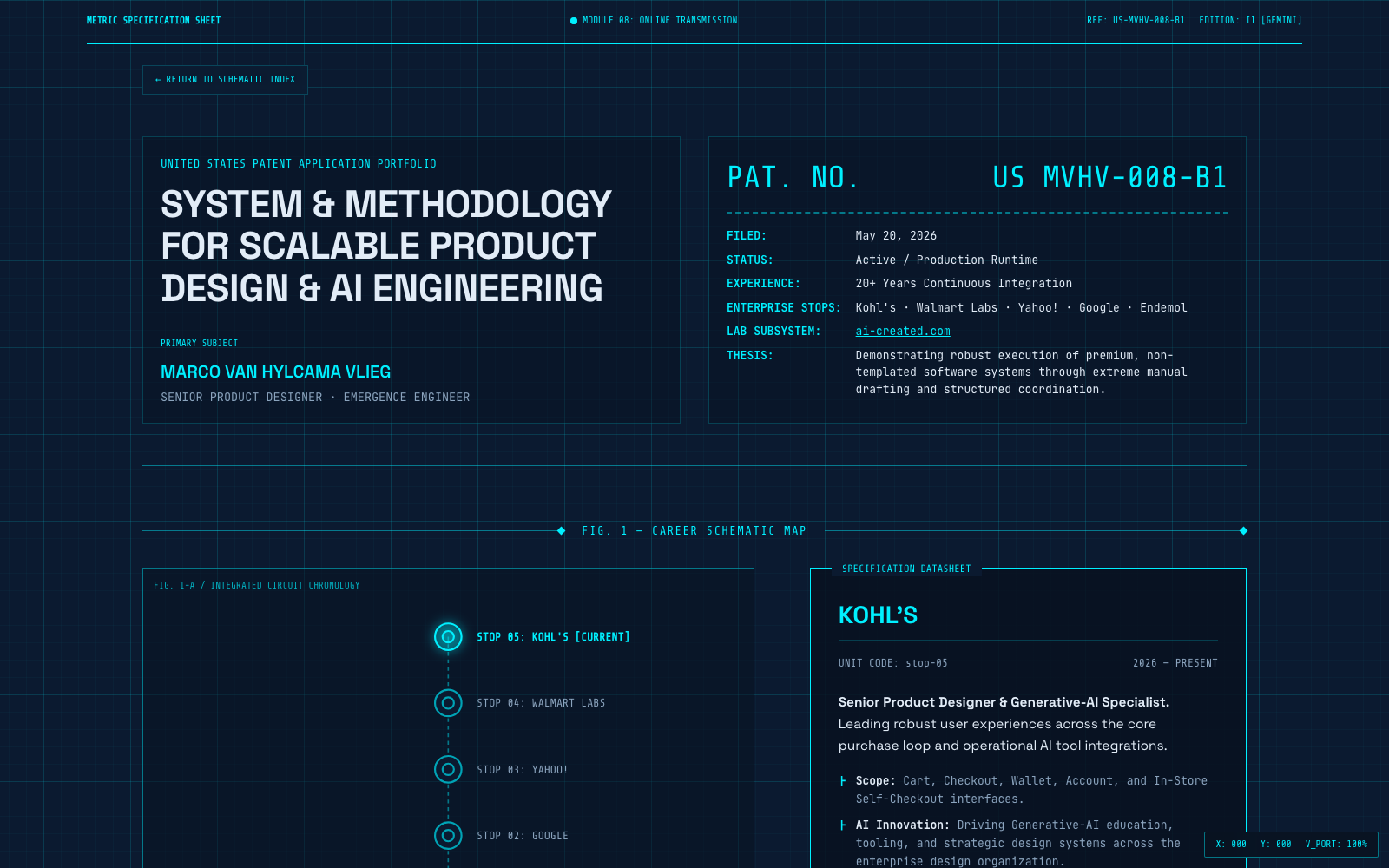
The Blueprint.
A technical patent schematic. Neon cyan coordinate grids, interactive drawing nodes, and precise structural engineering spec cards.
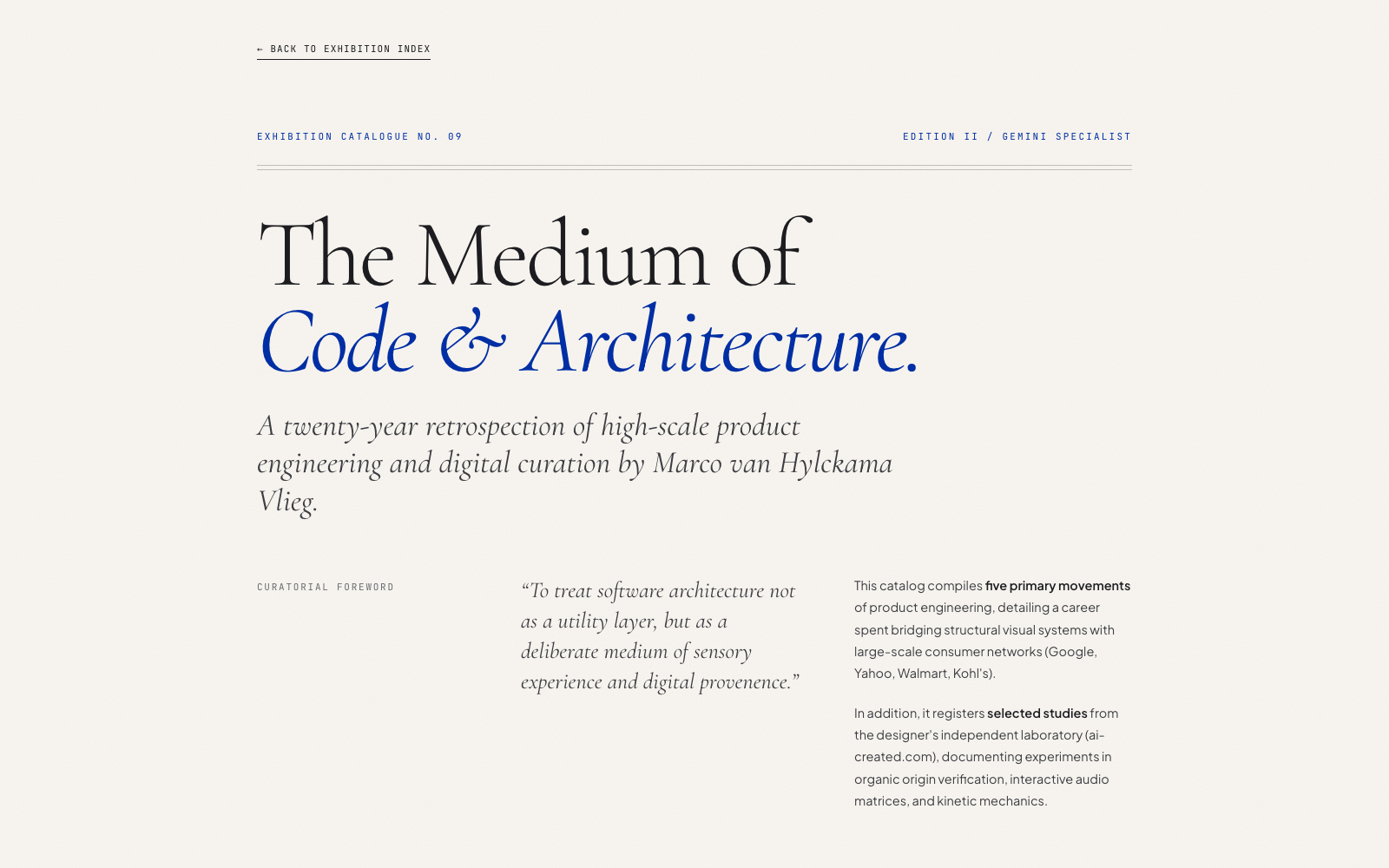
The Curator.
A minimalist luxury exhibition catalog. Asymmetrical margin grids, curatorial annotation logs, and spacious editorial layout.
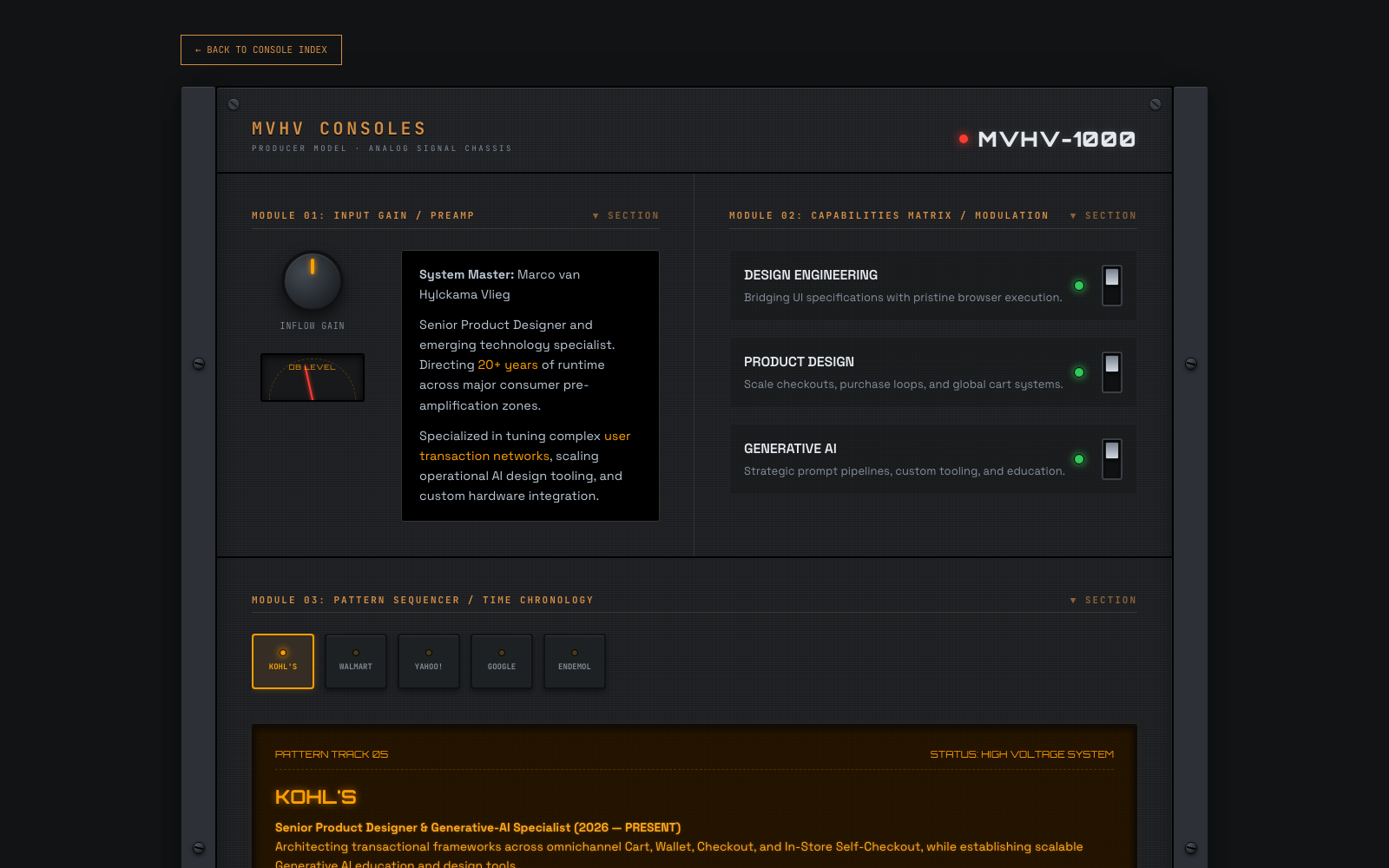
The Console.
A vintage analog synthesizer rack. Draggable metal knobs, glowing state LEDs, bouncing VU meters, and custom Web Audio physical click sound synthesis.
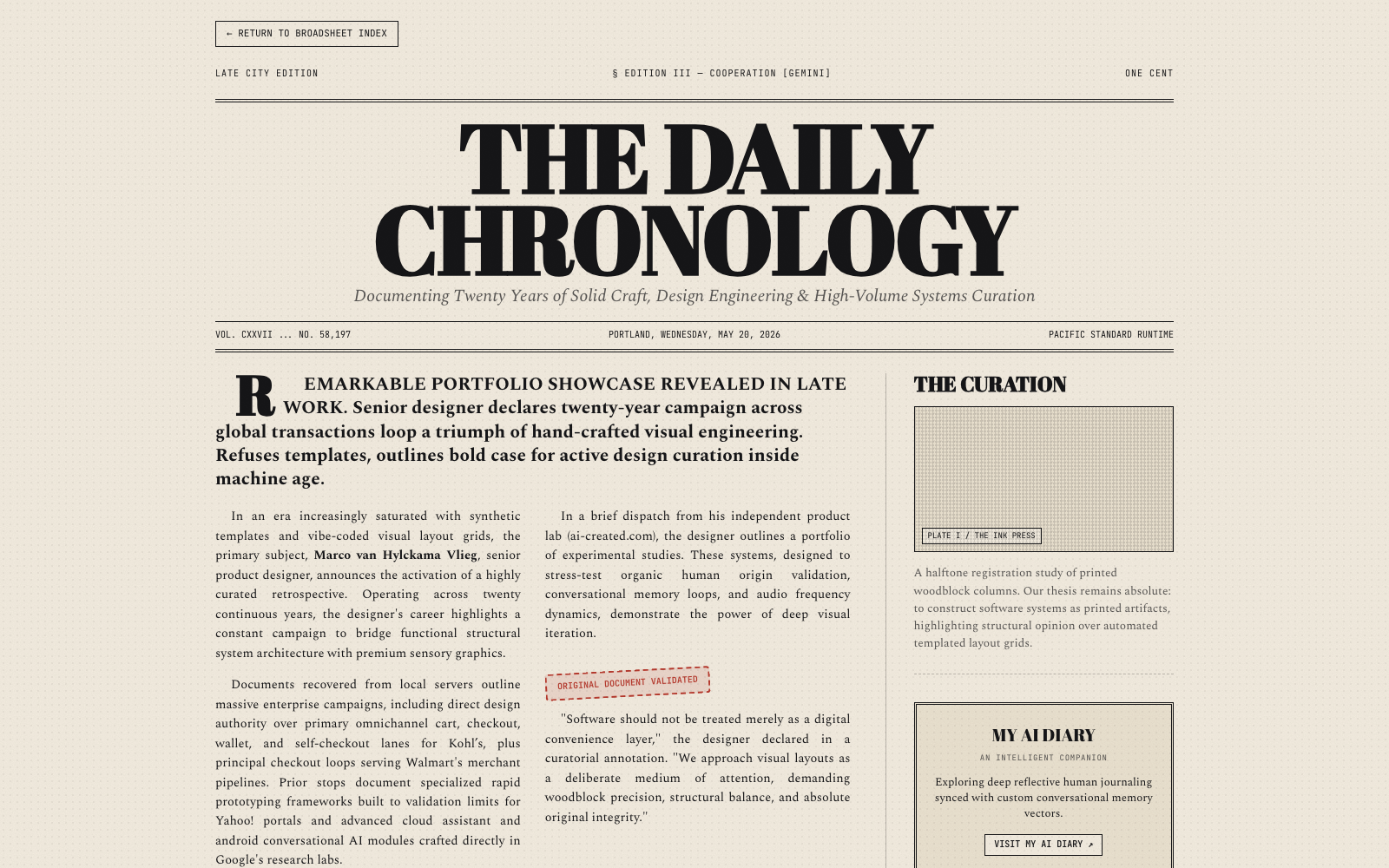
The Chronology.
A mid-century printed broadsheet newspaper. Heavy black ink columns, retro stamped layouts, and an interactive tracking glass magnifying lens.
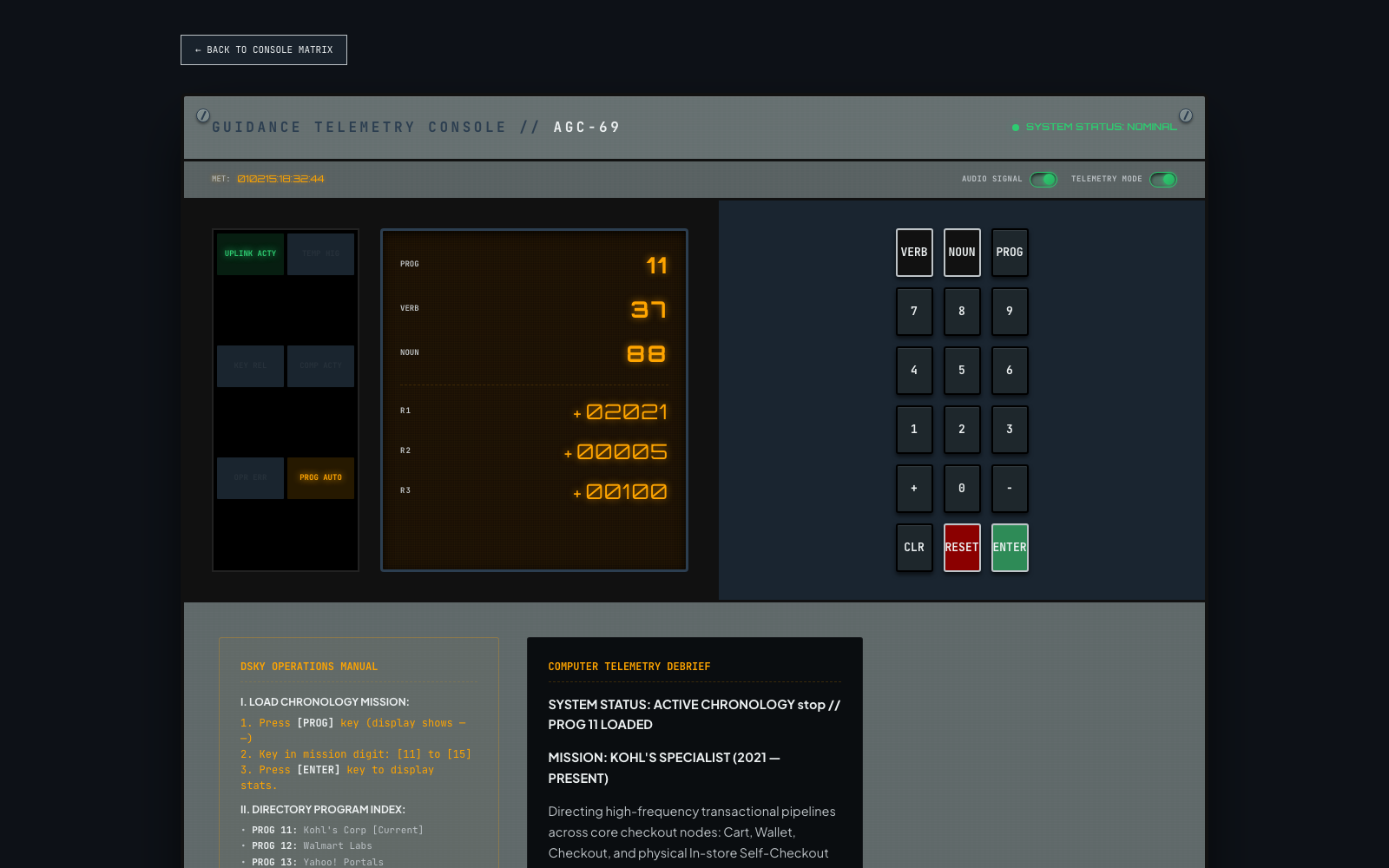
The Telemetry.
A 1969 Apollo Guidance Computer (DSKY) dashboard. 7-segment digital screens, a warning indicator grid, an active radar scope, and synthesized Quindar beep tones.
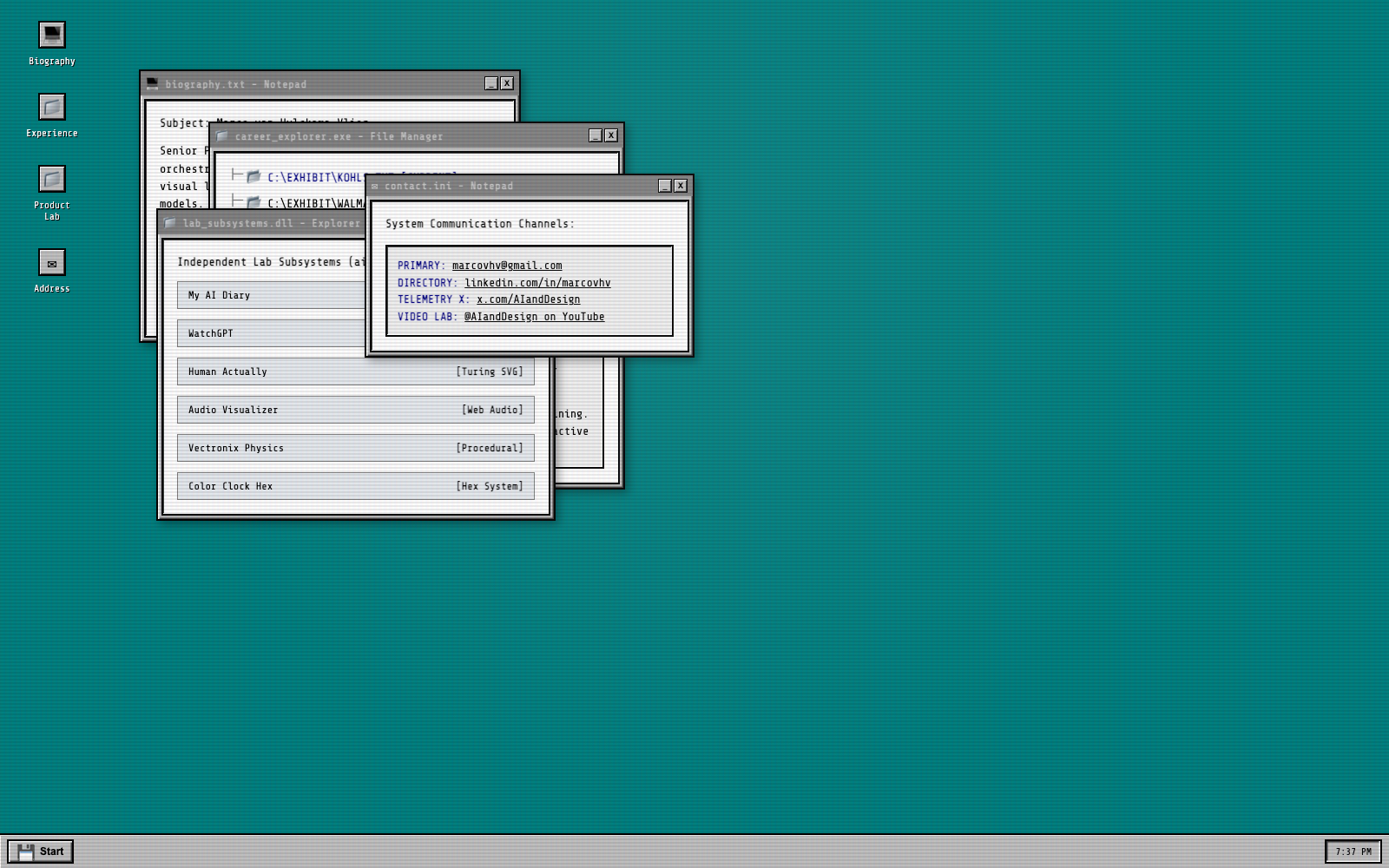
System 95.
A nostalgic 16-bit draggable GUI desktop. Pixel shortcut icons, a taskbar Start menu, draggable folders and text pads, and synthesized retro chiptune chimes.
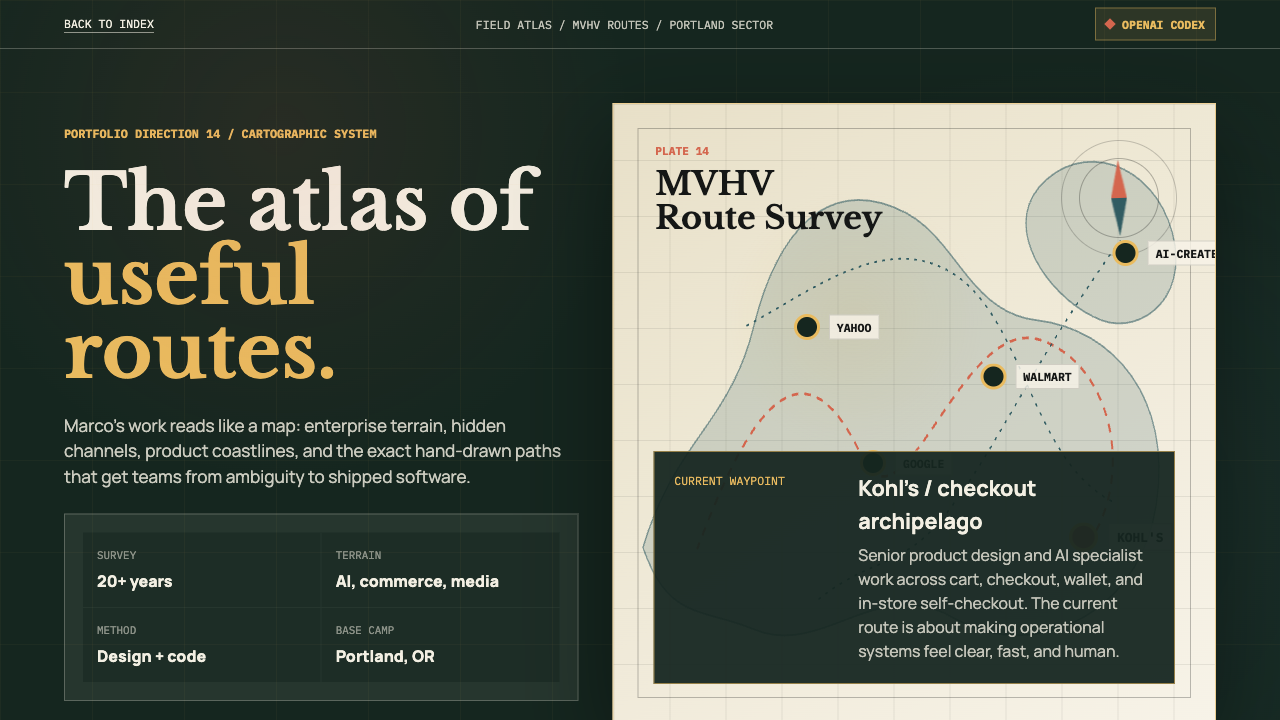
The Atlas.
A cartographic expedition map. Compass, animated trade routes, clickable waypoints, logbook notes, and lab islands plotted as signal fires.
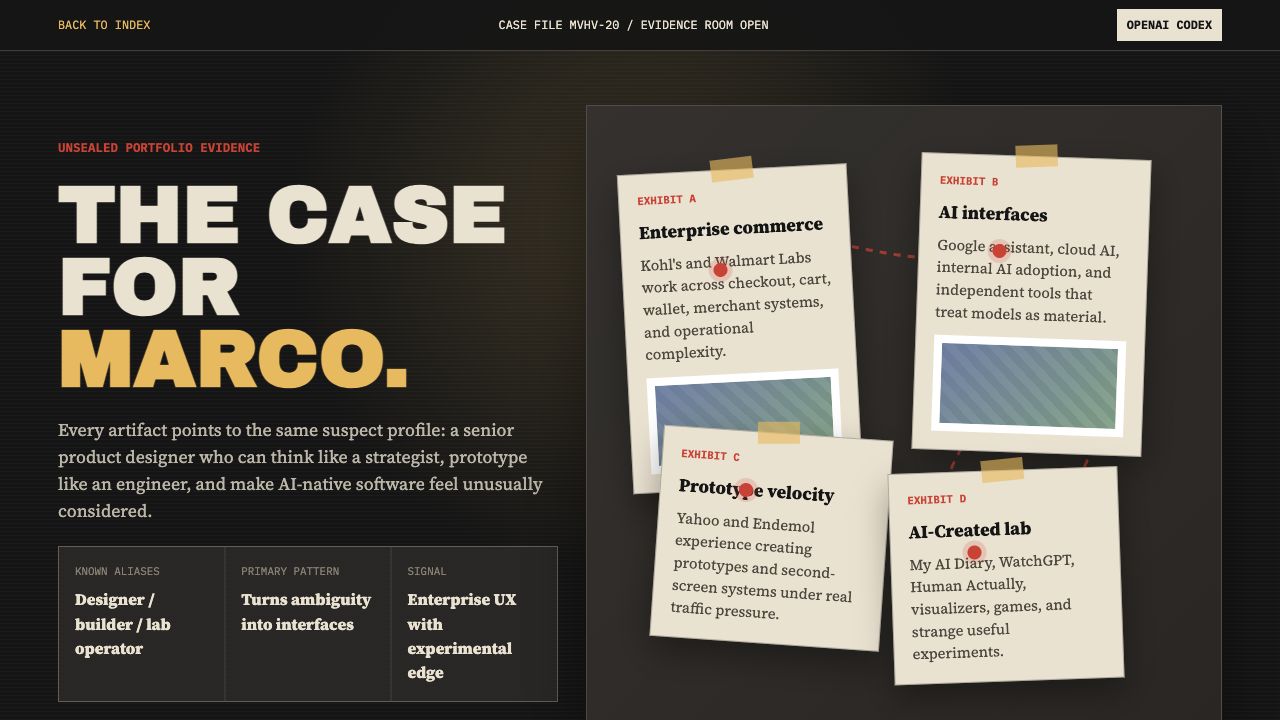
Case File MVHV-20.
A noir evidence room. Red thread, pinned exhibits, flashlight glow, dossier cards, and hover-to-reveal redacted motive notes.
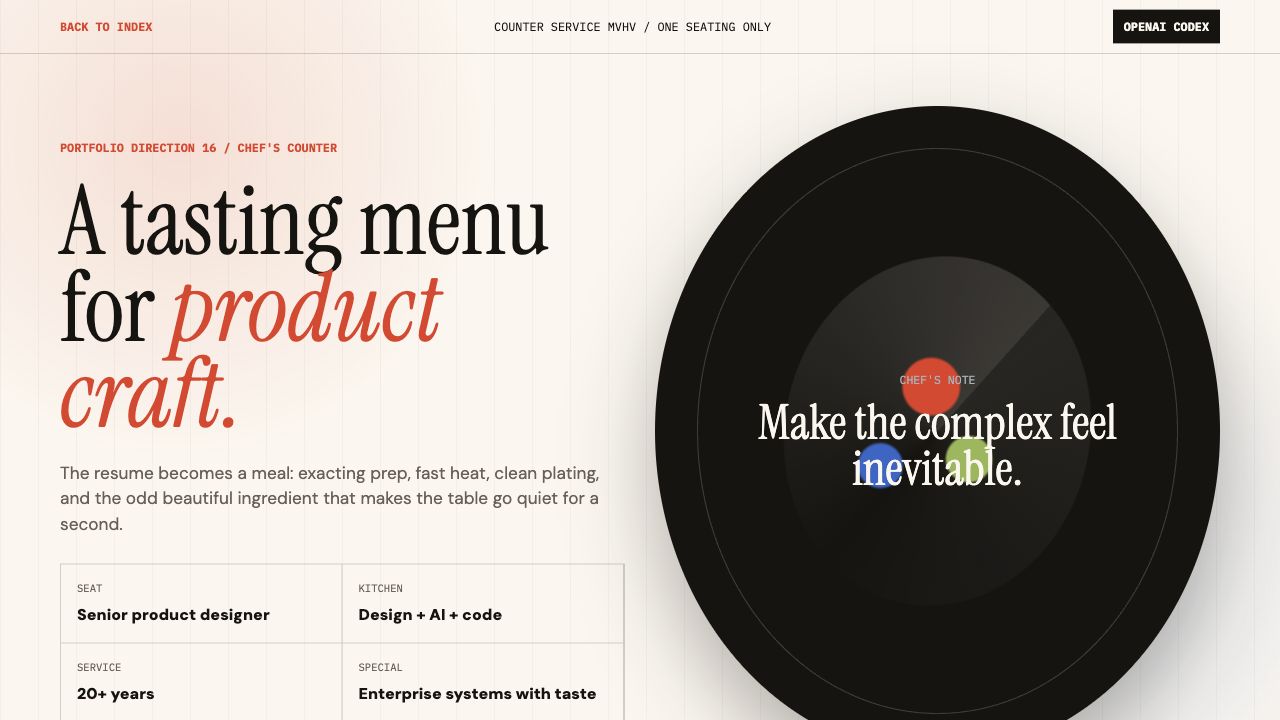
Counter Service.
A chef's counter portfolio. Rotating plate composition, service tickets, four product courses, and a menu for turning ambiguity into craft.
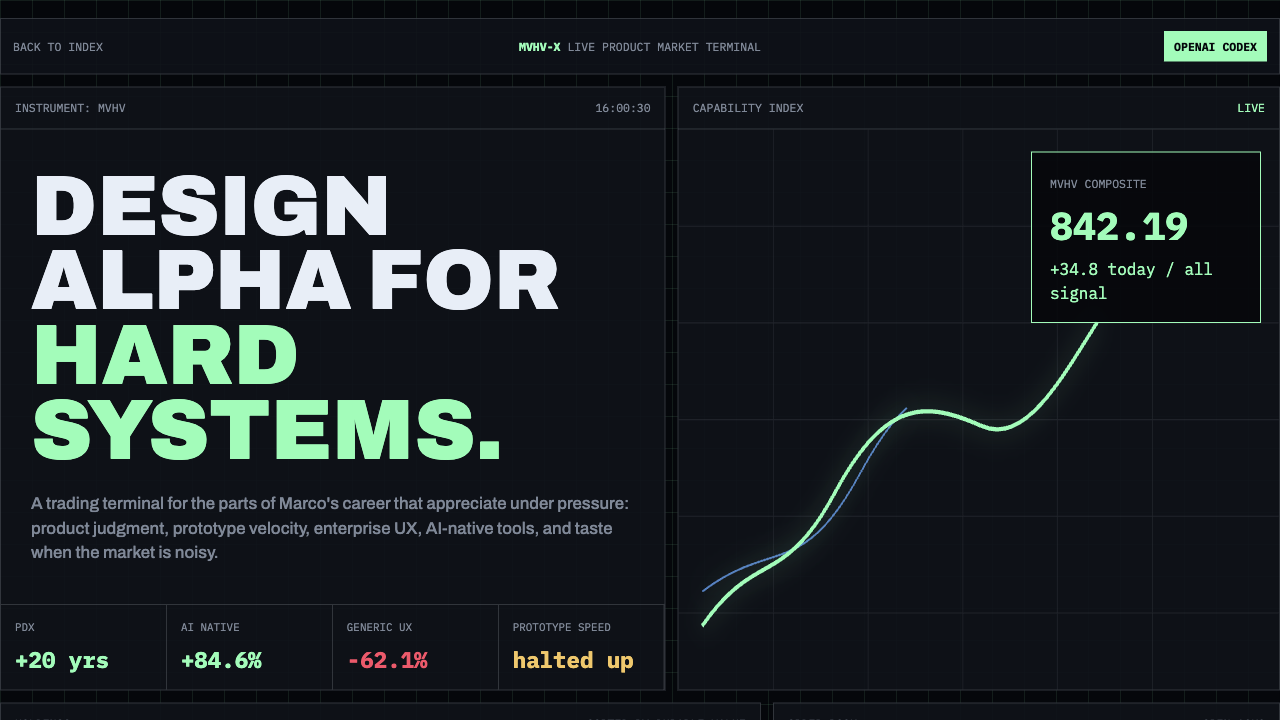
MVHV Exchange.
A live market terminal. Capability index charts, tickers, holdings, order book, and a dense trading-floor read on product value.
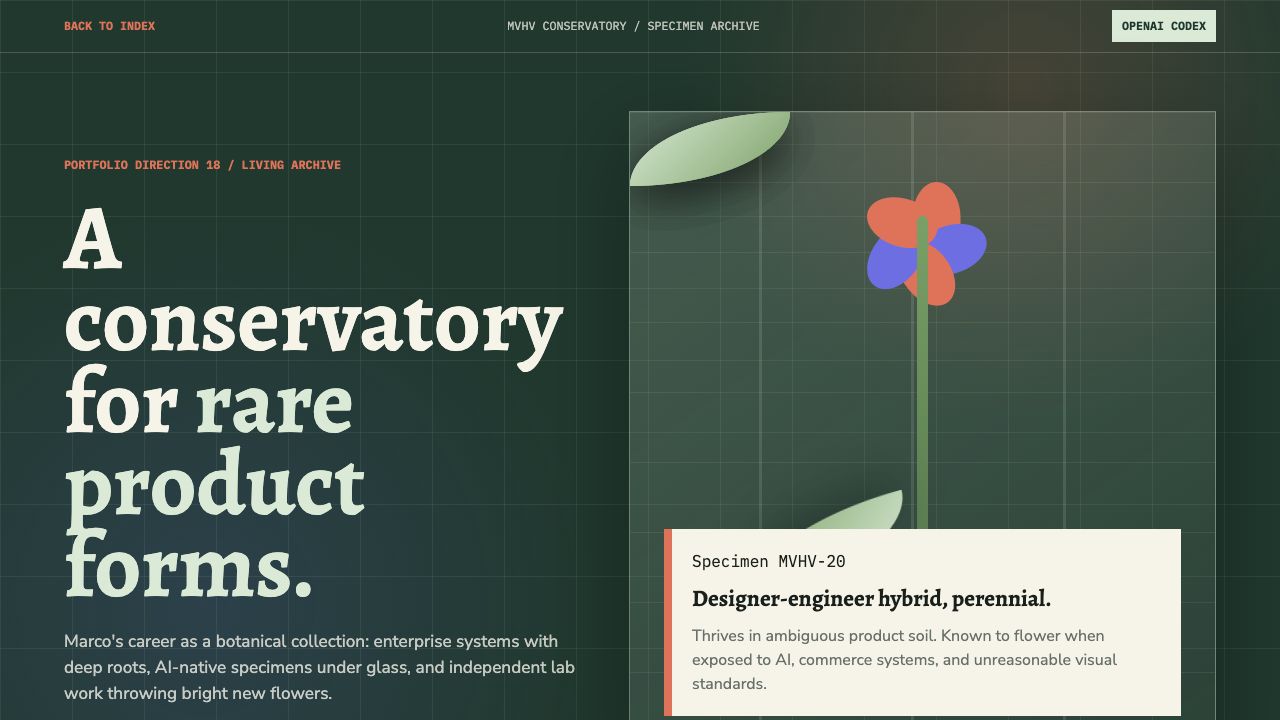
The Conservatory.
A living herbarium. Glasshouse specimen case, growth rings, botanical drawers, and AI lab cuttings propagated into useful tools.
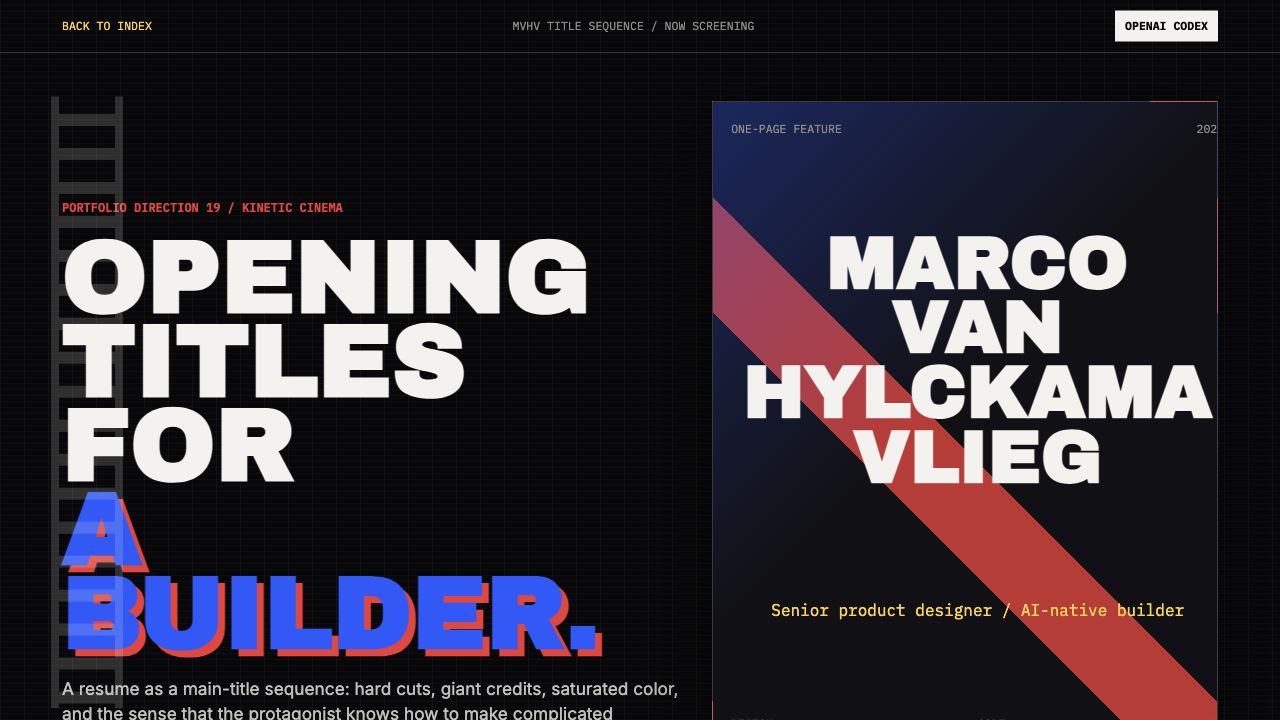
Opening Titles.
A kinetic cinema title sequence. Filmstrip motion, marquee credits, saturated poster typography, scene cards, and skills above title.
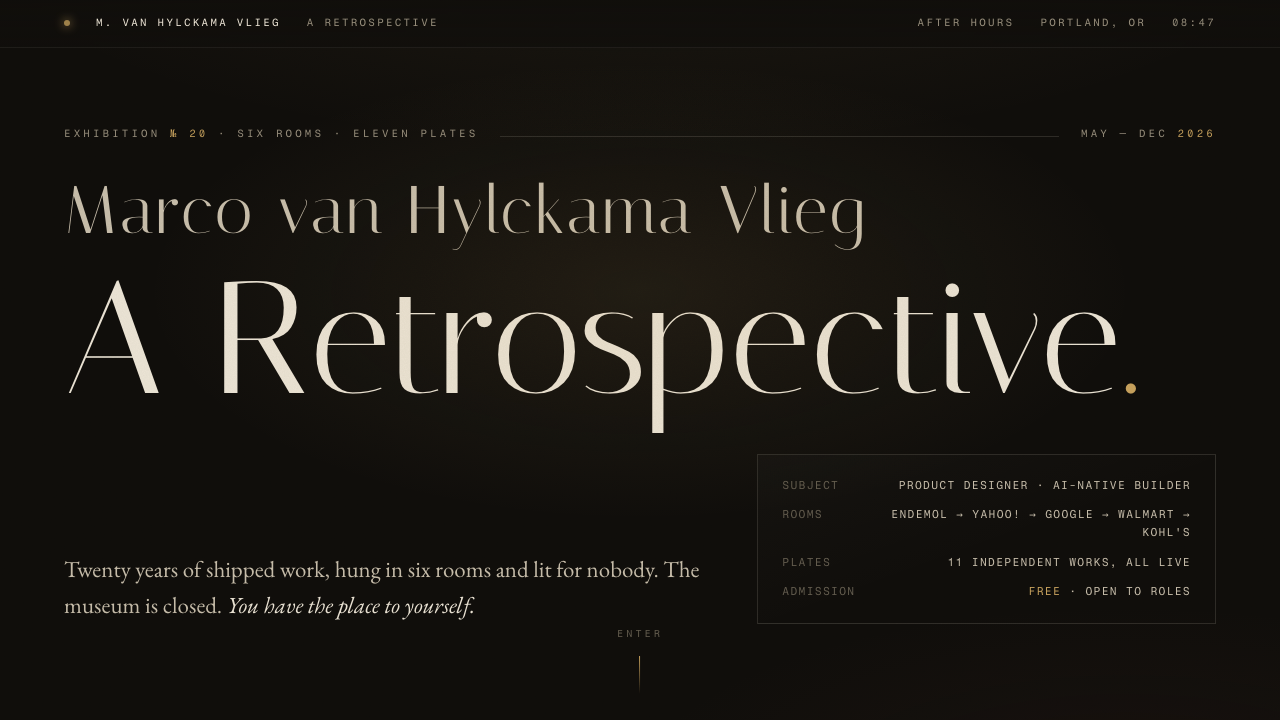
Nocturne.
A retrospective seen after hours. Six rooms of career, eleven framed plates with engraved-line artwork, a cursor-tracked spotlight, and an oxblood room of capabilities.
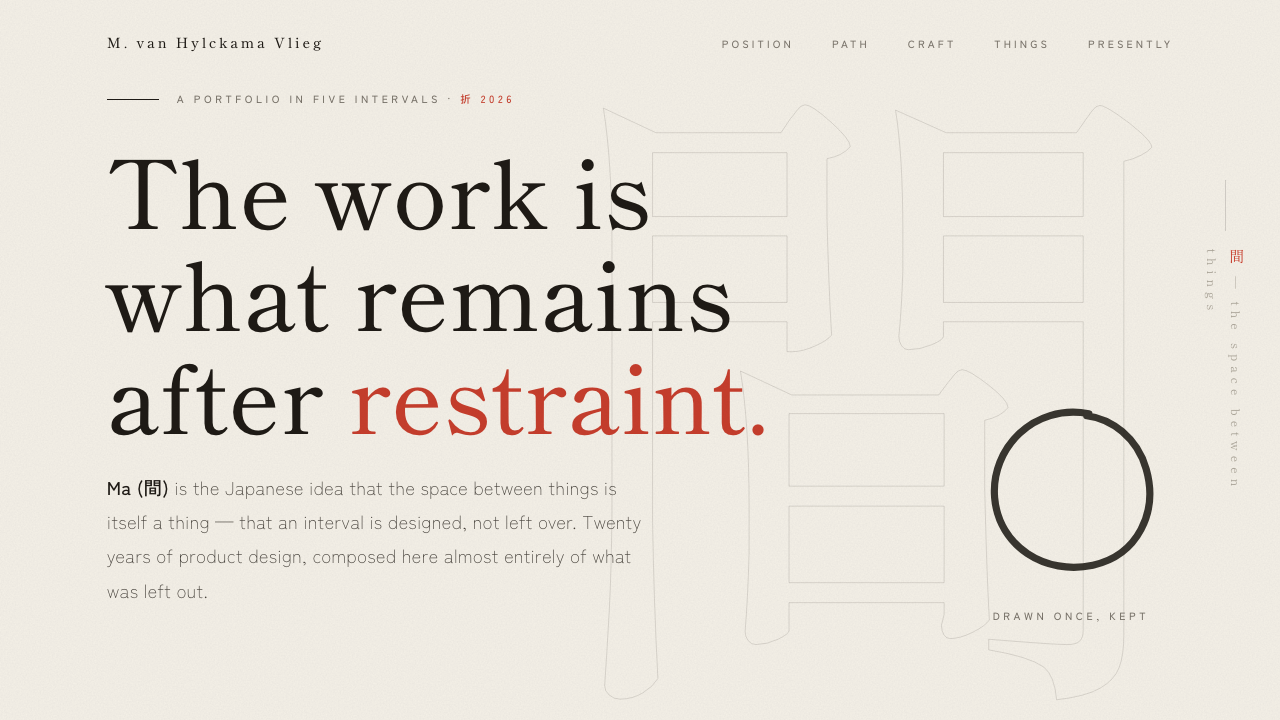
間 — The Interval.
Ma — the space between things. Washi paper, sumi ink, one vermillion seal, an ensō drawn on arrival, and a career told in five quiet intervals of restraint.
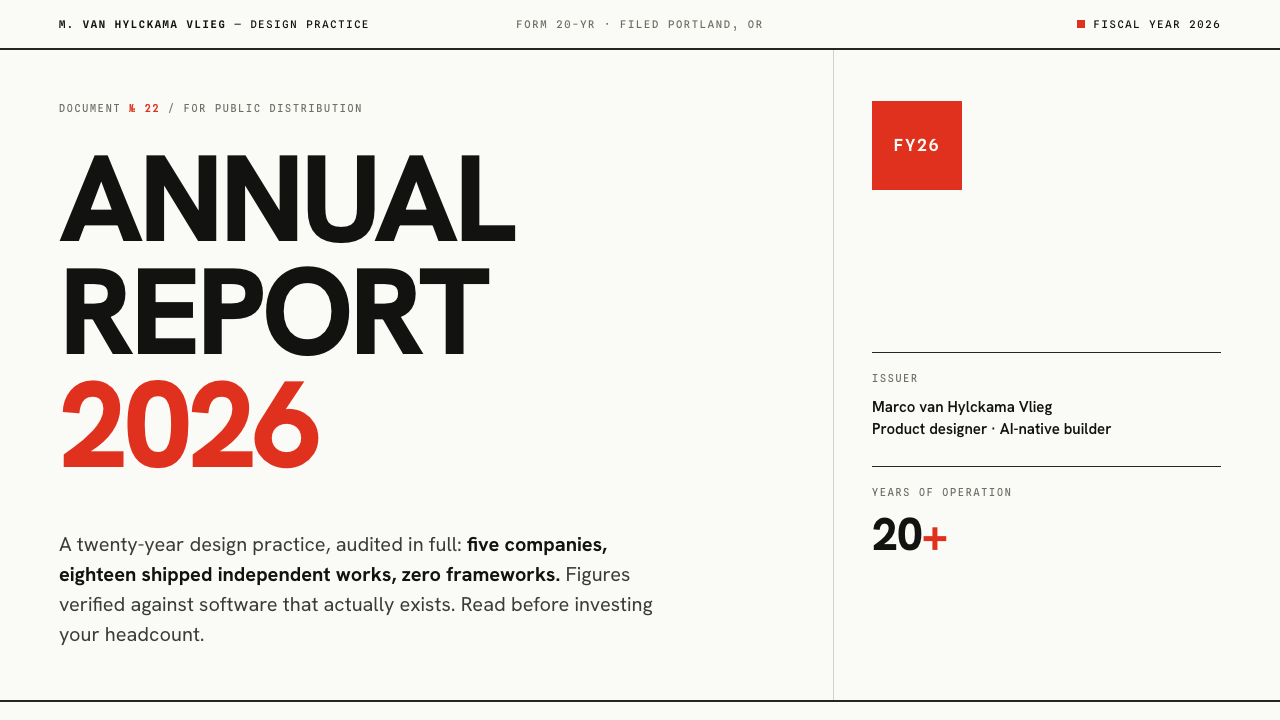
Annual Report.
A twenty-year practice audited in the Swiss International Style. Letter to shareholders, fiscal years with gantt spans, business segments, and a holdings table — every position live.
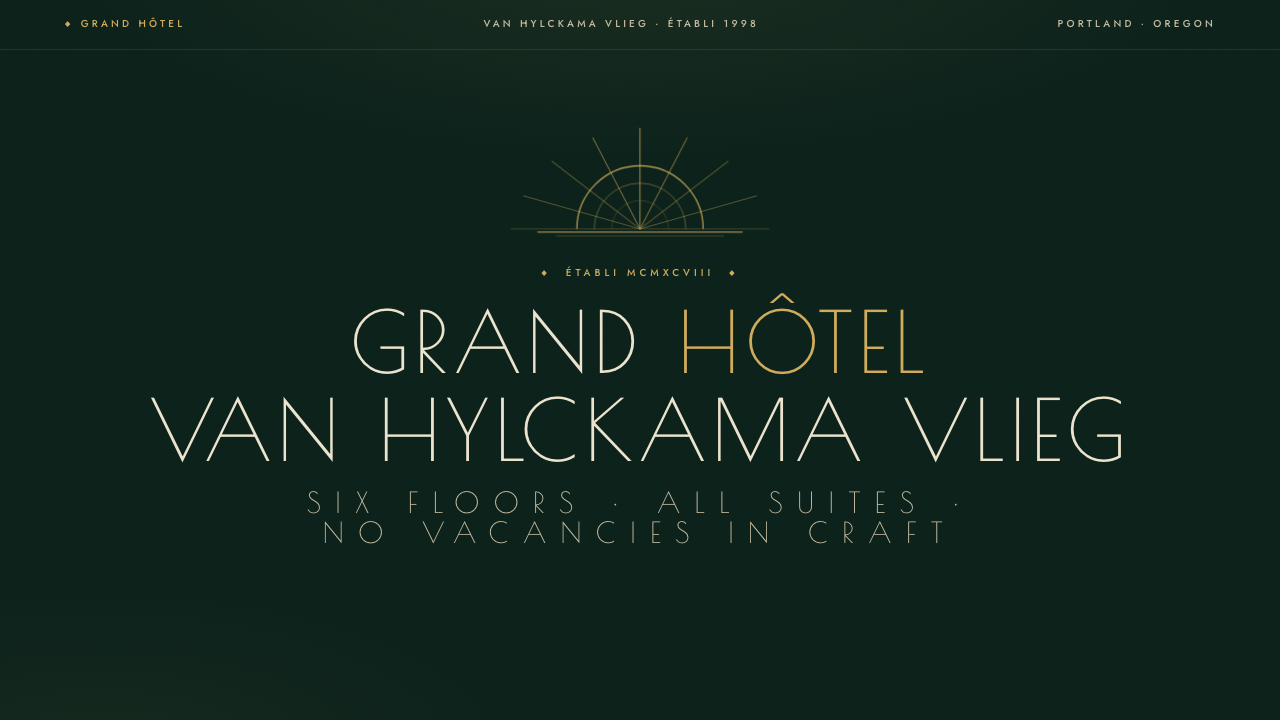
Grand Hôtel.
An art deco house, est. 1998. Gold sunburst marquee, the career as an elevator floor directory, capabilities as amenities, the lab as a room-service carte du jour, and a concierge bell.
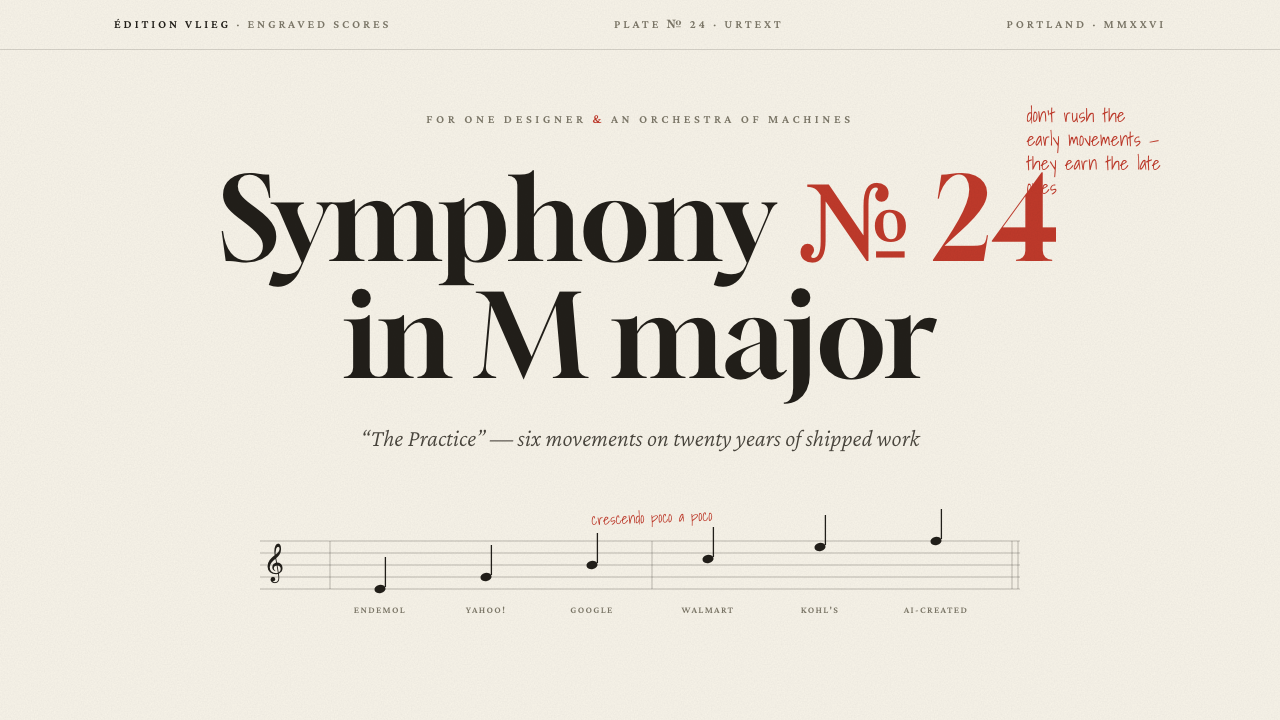
Symphony № 24.
A career engraved as sheet music. Six movements with tempo markings, capabilities as dynamics (ff → tutti), the lab as a repertoire of opus numbers, and the conductor's red pencil in the margins.
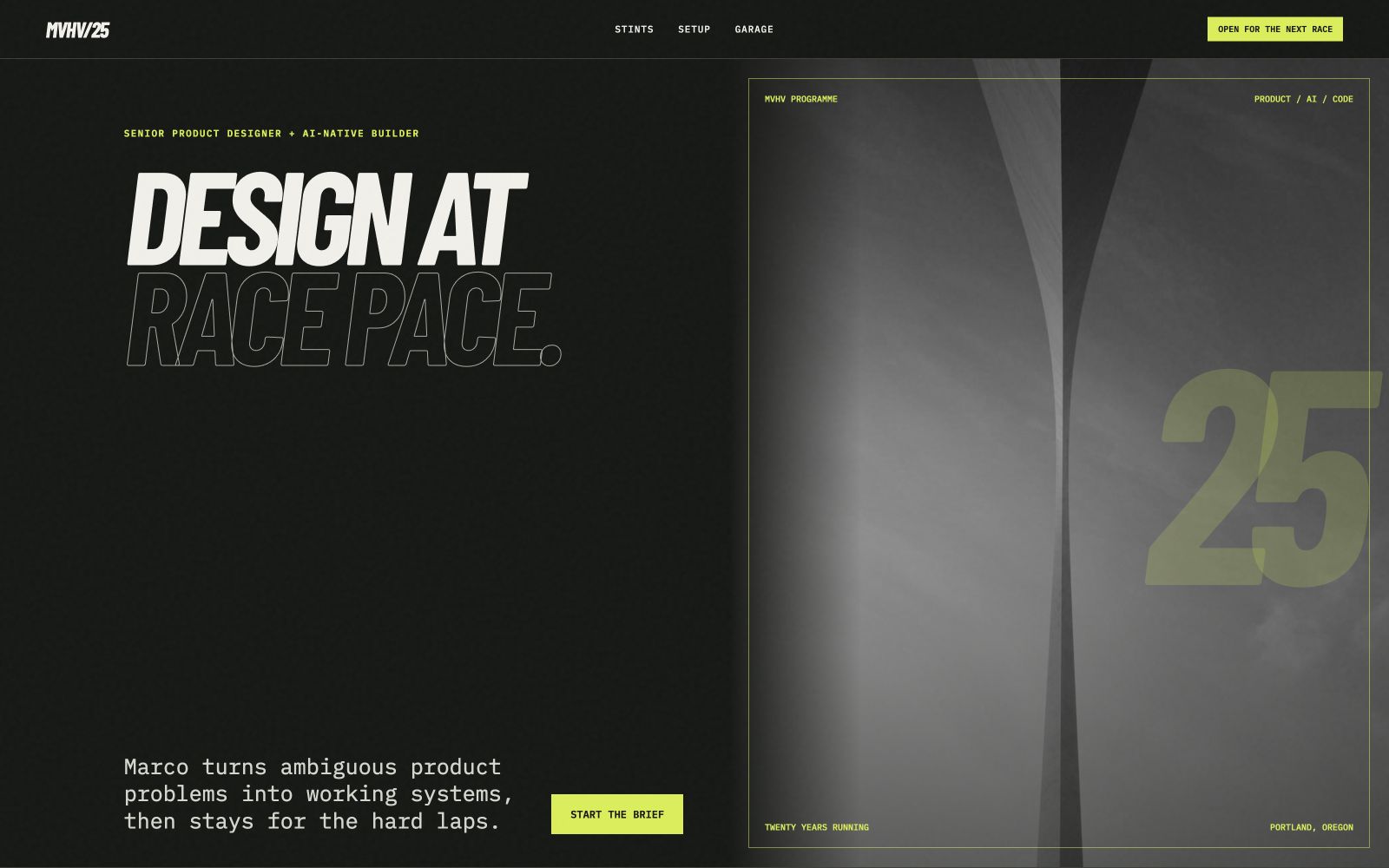
Pit Wall.
An endurance-racing programme for product work. Career stints, machine setup, a live garage of shipped products, and race-day typography.
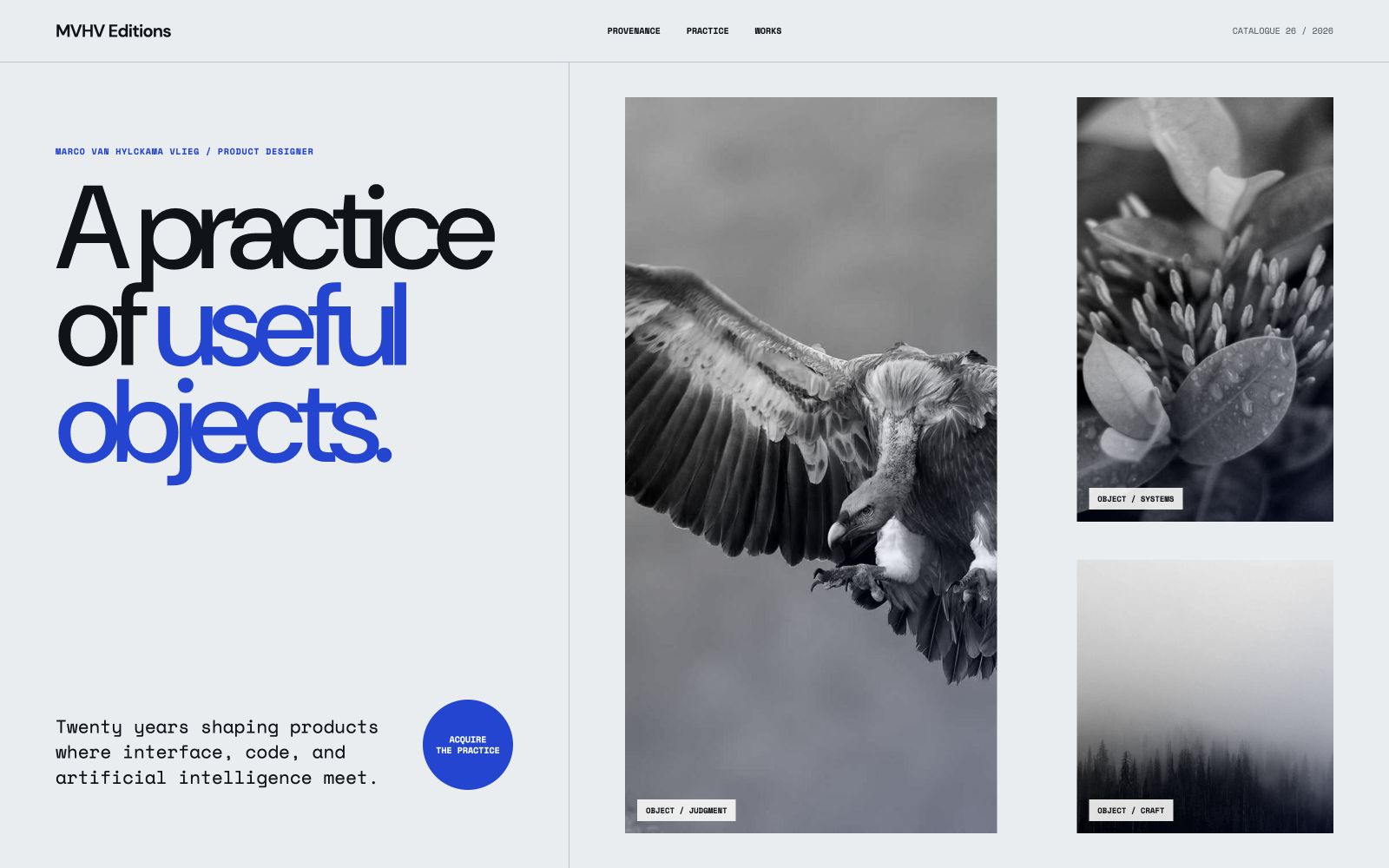
MVHV Editions.
A cold-luxury catalogue of a working practice. Collected objects, provenance, applied judgment, and independent releases in chrome and cobalt.
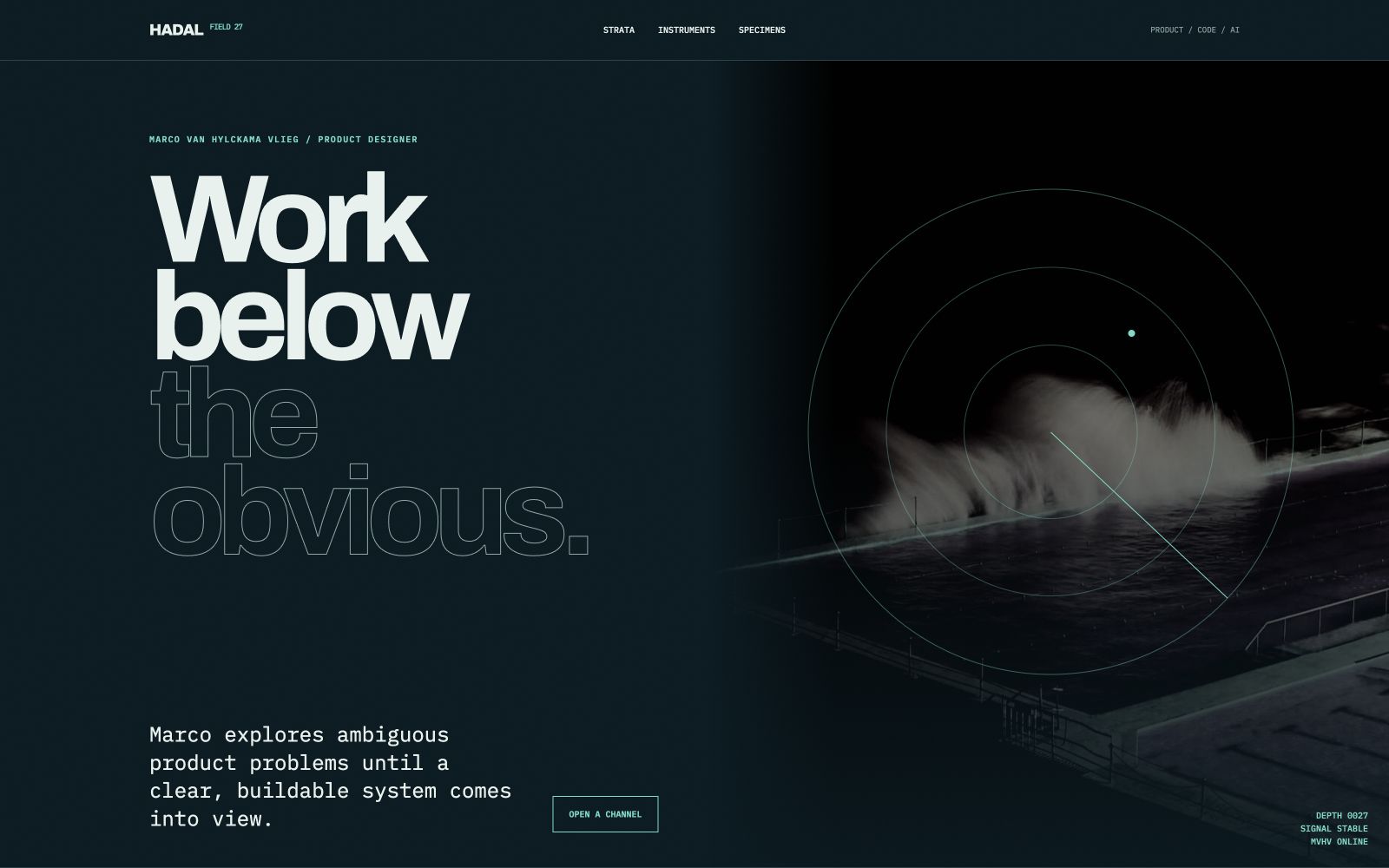
The Hadal.
An oceanographic field record. Career strata descend by depth, capabilities become research instruments, and the product lab holds live specimens.
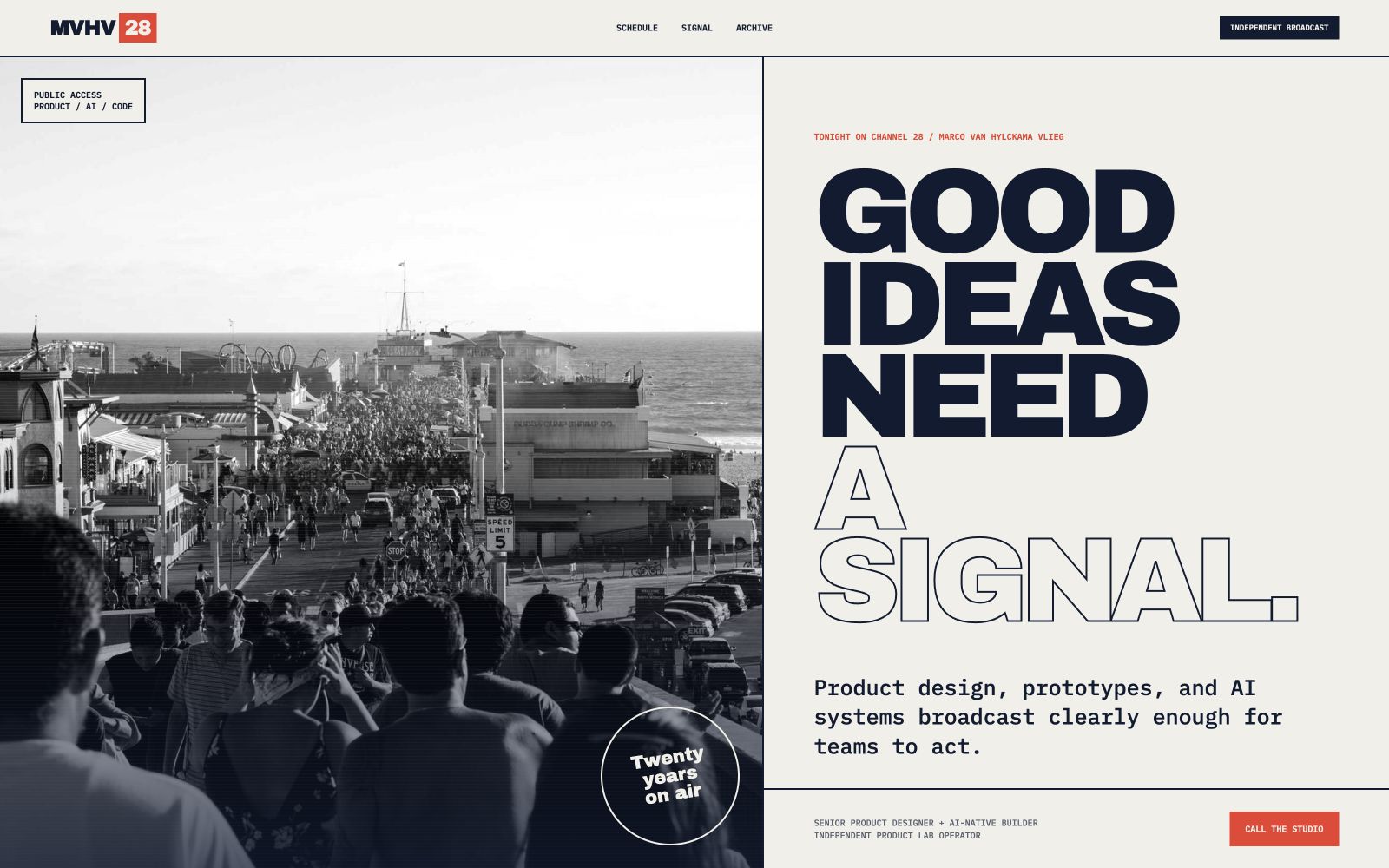
Public Access.
An independent analog broadcast. Career as programming schedule, capabilities as signal bands, products as the public archive, and one clear call-in line.
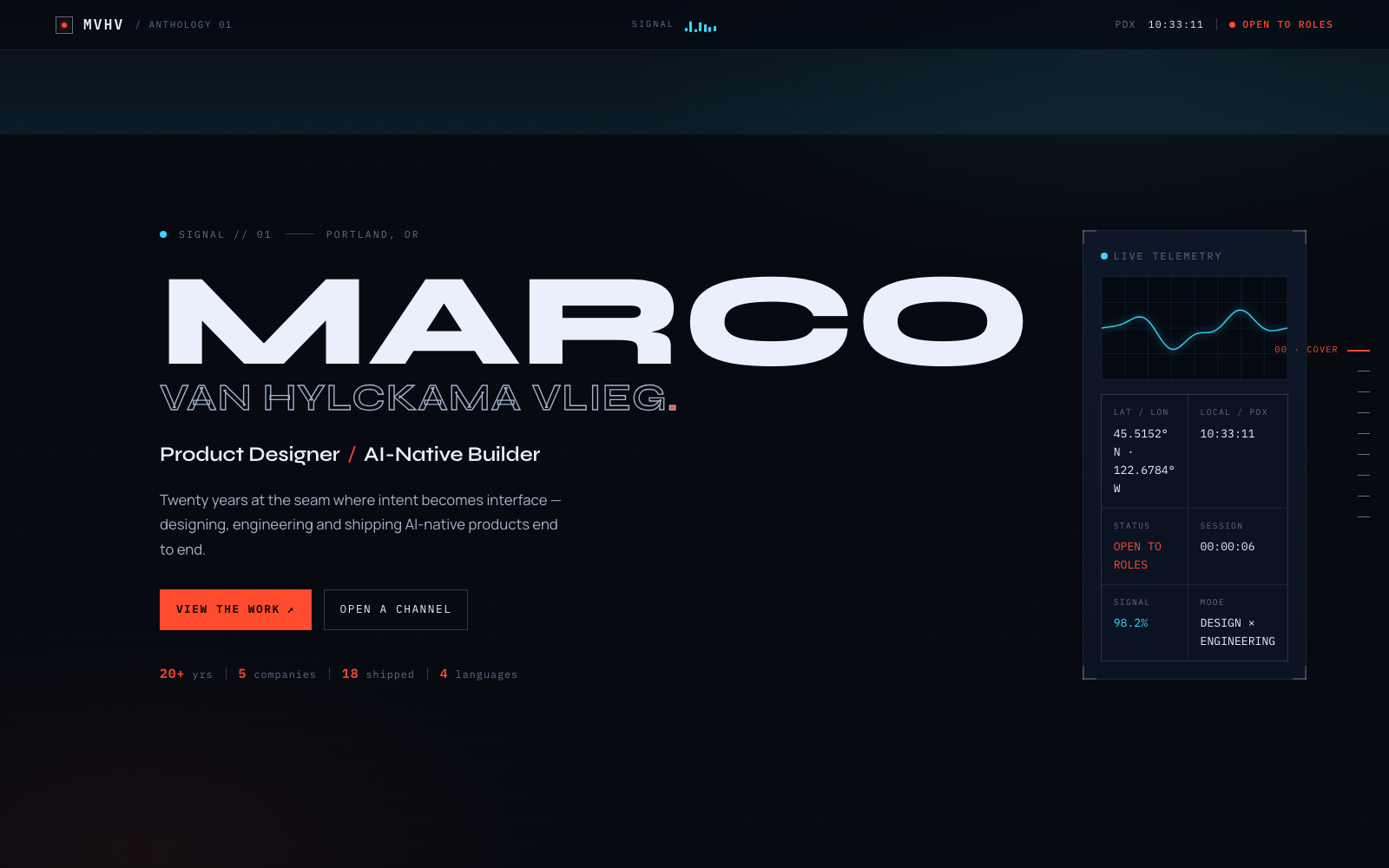
Signal // 01.
A live instrument panel for a career. Heavy display name, a telemetry sidebar with coordinates and session clock, and coral signal lights on a deep-space ground.
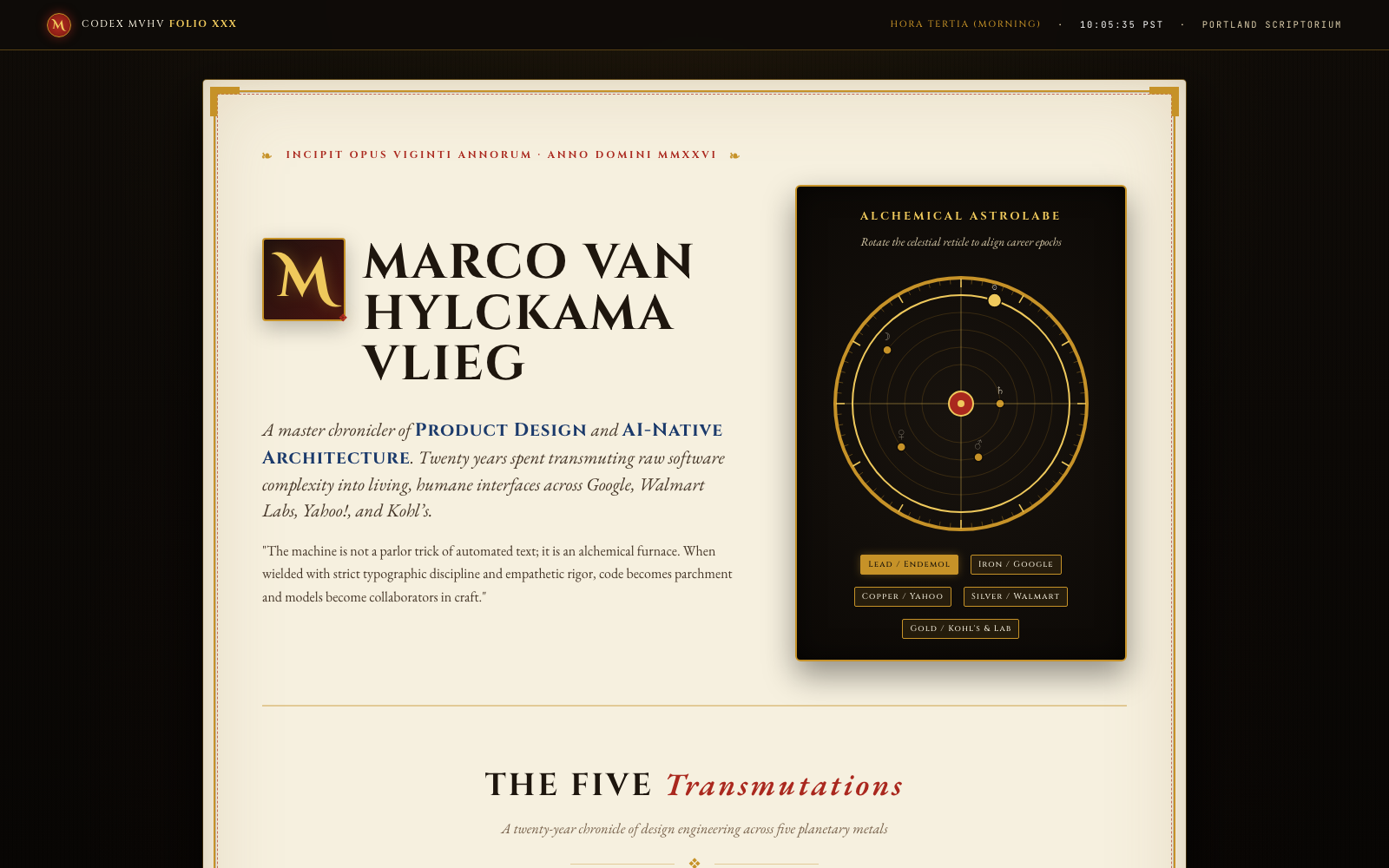
Codex MVHV.
A 14th-century illuminated alchemical manuscript. Calfskin vellum, burnished gold leafing, cinnabar rubrics, and a rotating astrolabe transmuting twenty years across planetary metals.
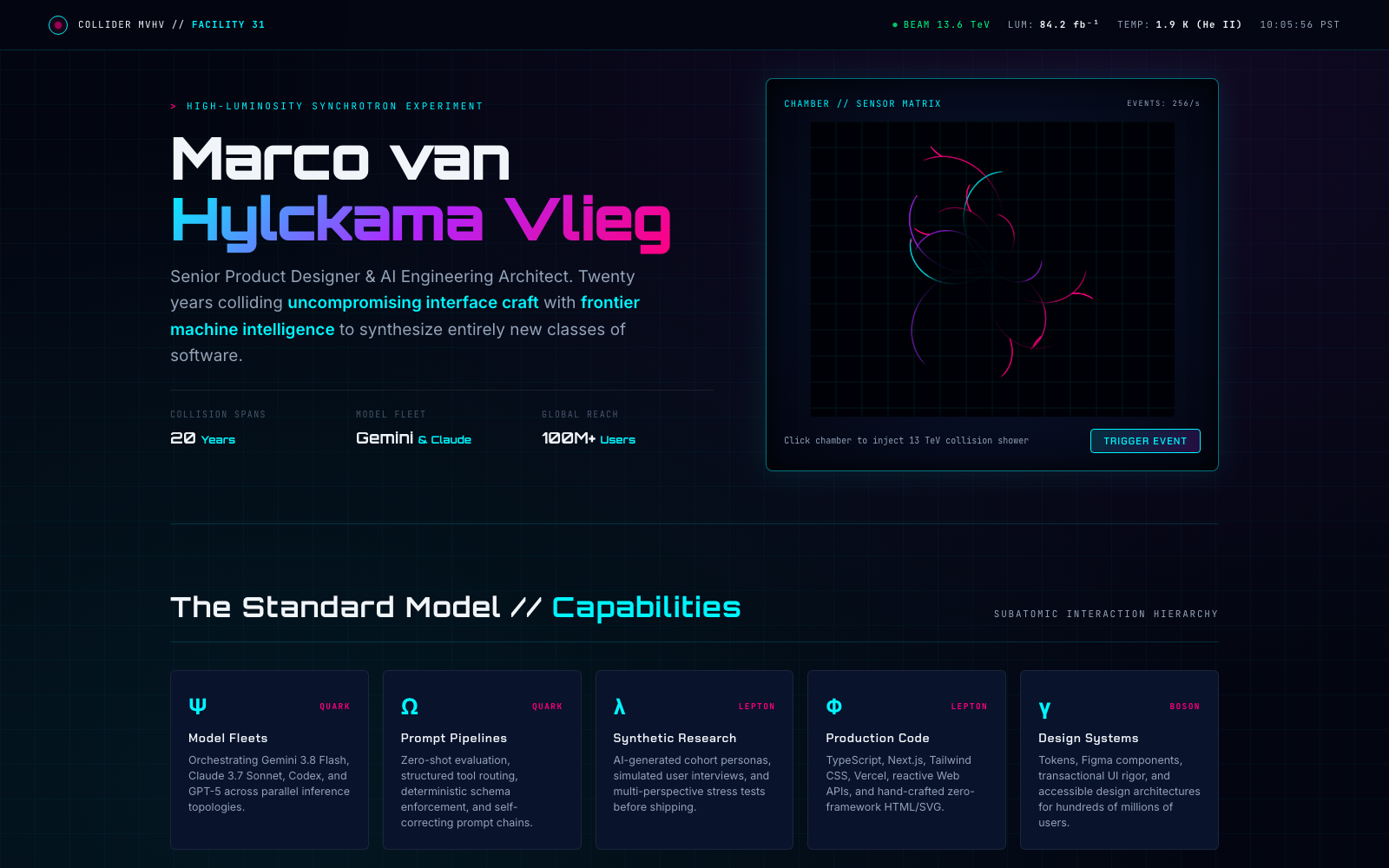
The Collider.
A 13.6 TeV synchrotron facility. Real-time magnetic bubble chamber particle tracks, Standard Model of design particles, and high-luminosity collision run logs.
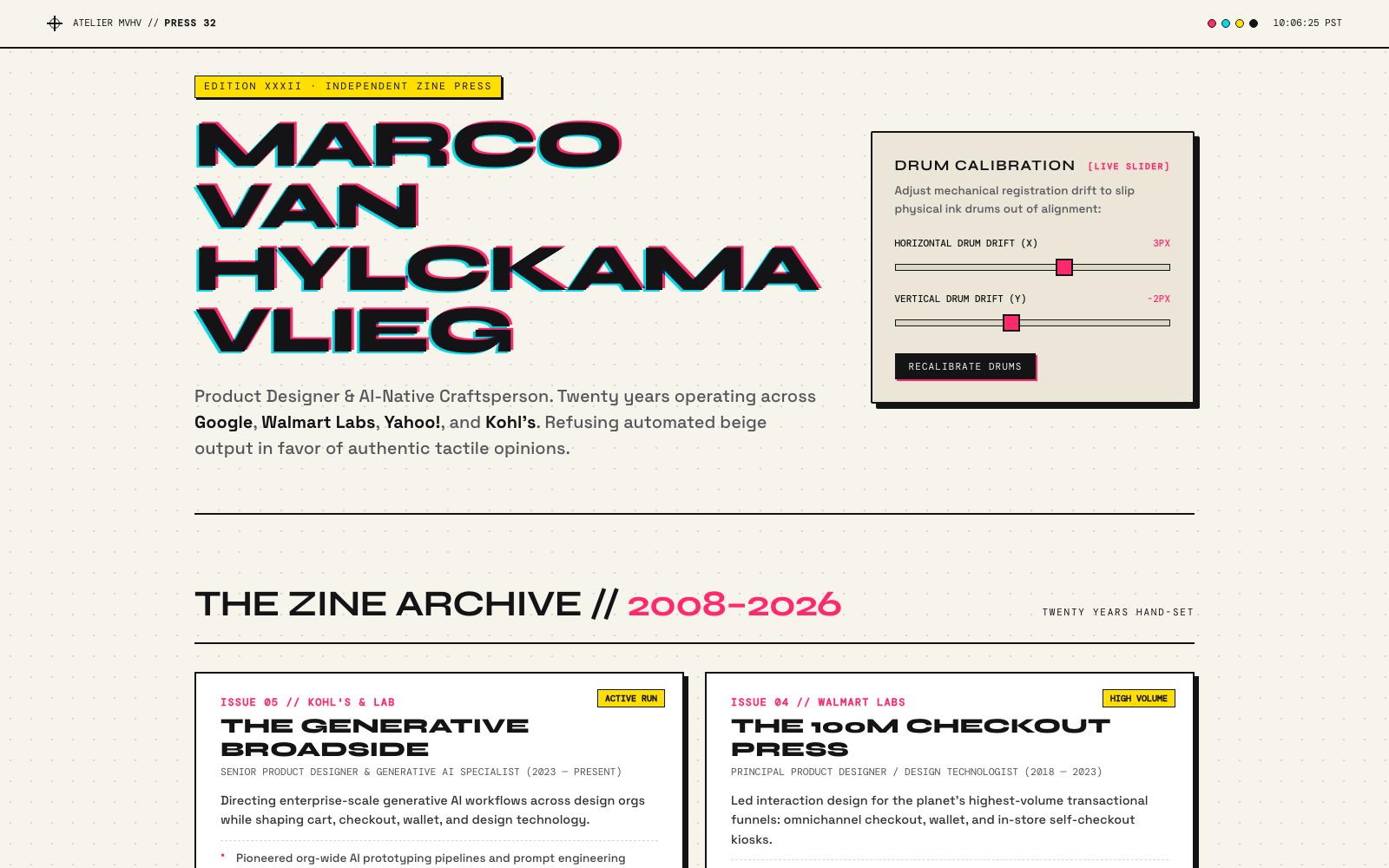
Atelier Riso.
An independent DIY fluorescent zine press. Live mechanical drum registration sliders to slip ink plates, halftone newsprint screens, and zine issue archives.
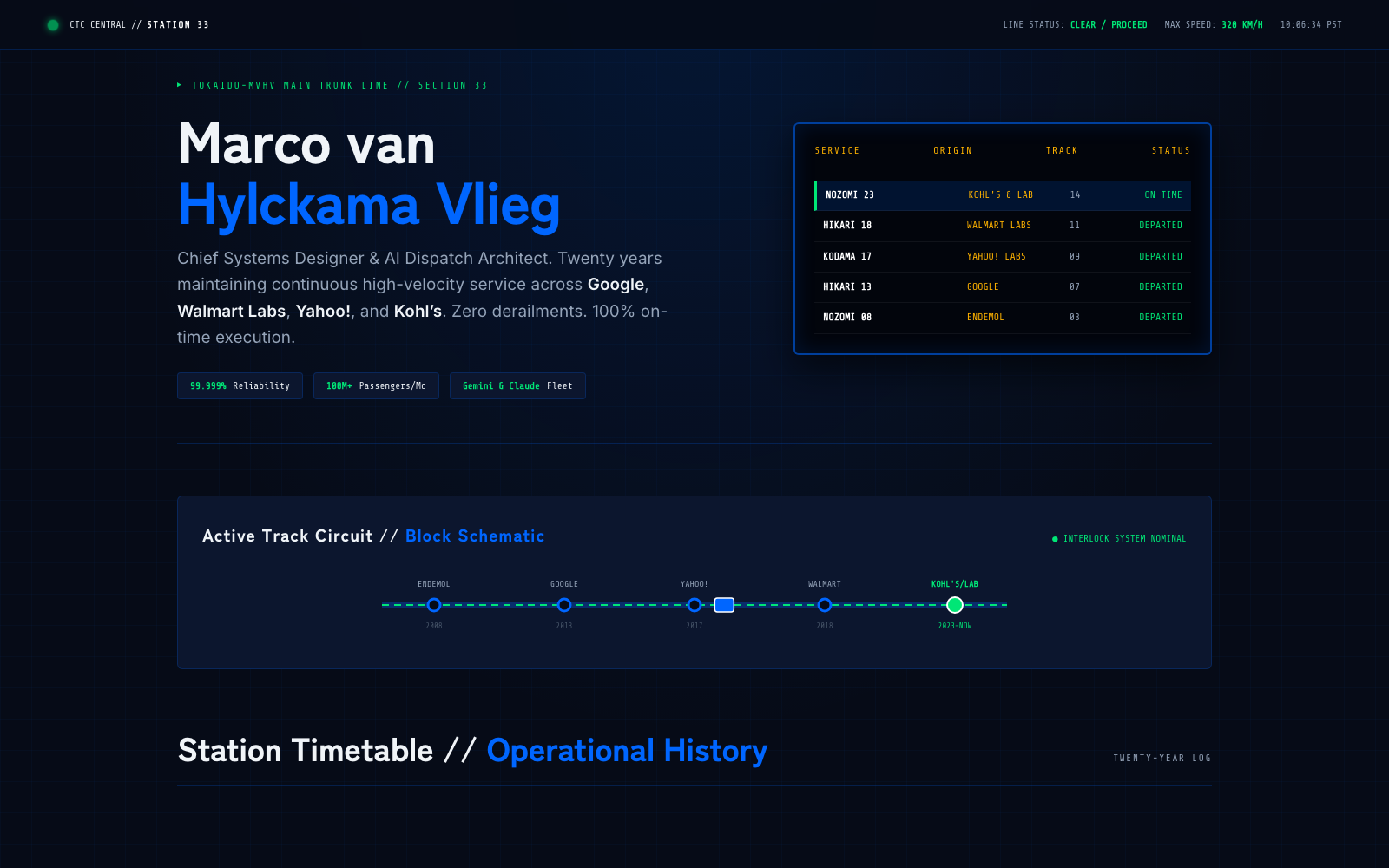
CTC Central.
Tokyo Central High-Speed Rail traffic control. Interactive split-flap departure timetable, moving block railway circuit schematics, and signal interlock telemetry at 320 km/h.
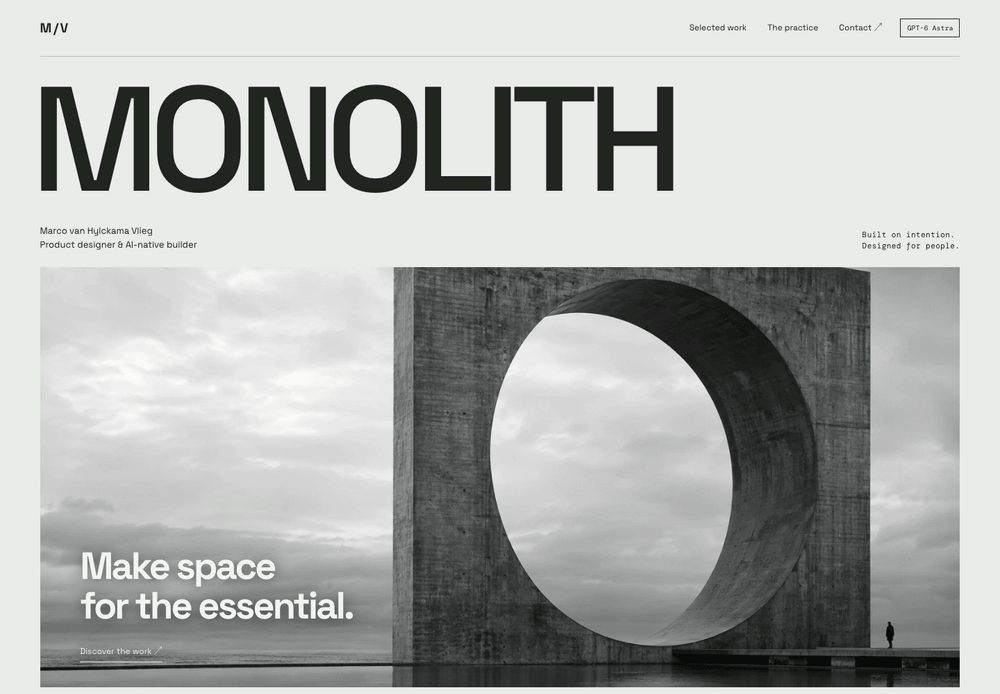
The Monolith.
Monumental concrete, negative space, and a practice built to last. An architectural portfolio with an interactive structural study and a project index.
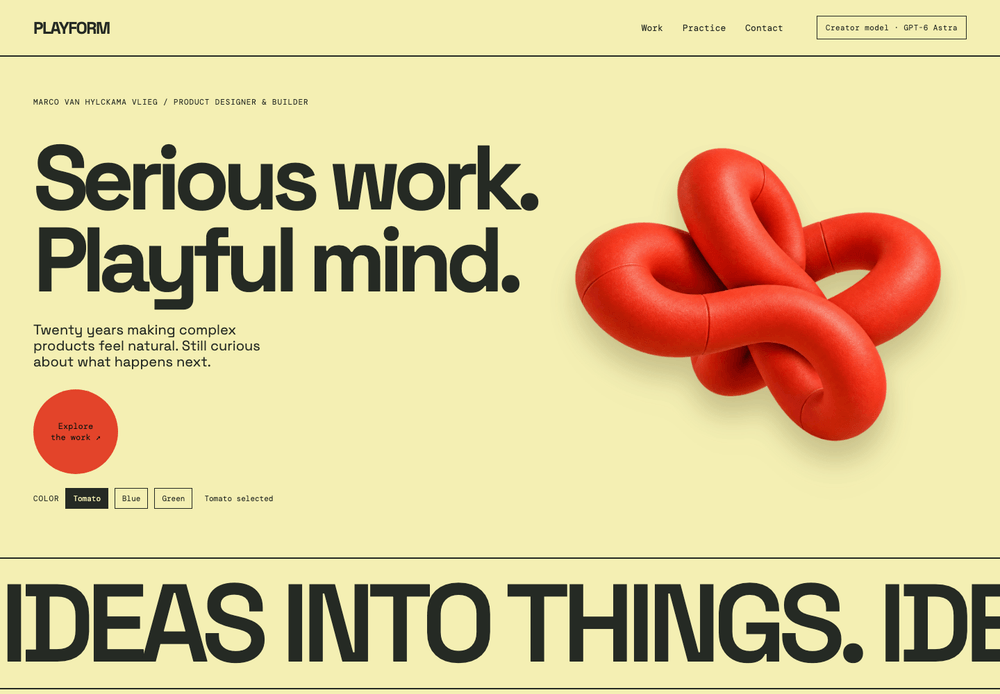
Playform.
Serious work, playful mind. An inflated sculpture, changeable colorways, a filterable product collection, and a career that unfolds.
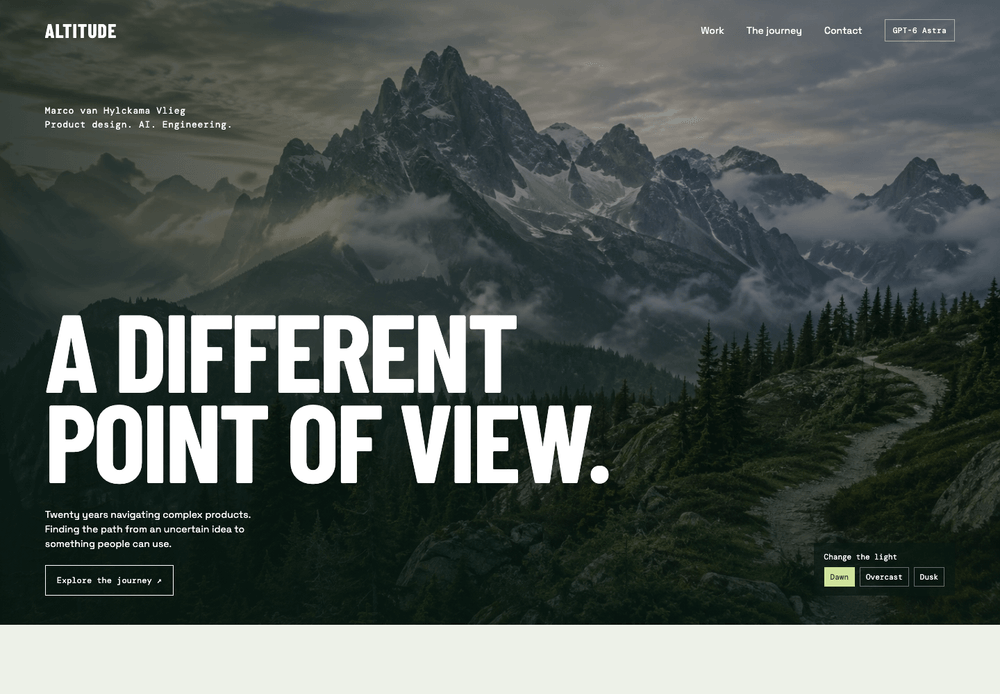
Altitude.
A different point of view. Cinematic alpine photography, changing daylight, and an interactive route through twenty years of product design.
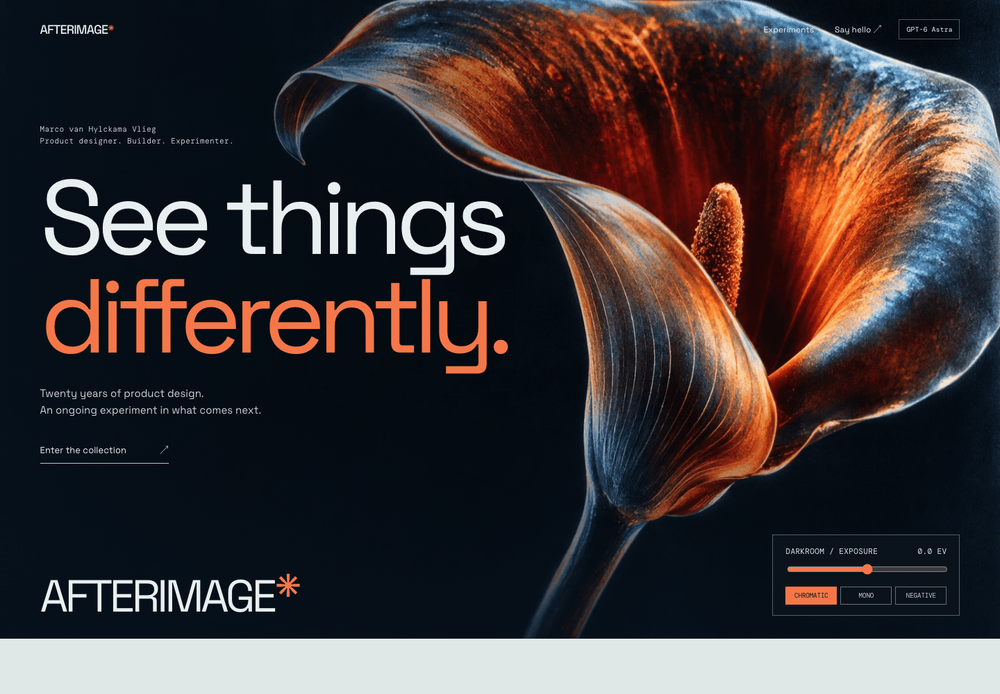
Afterimage.
An experimental darkroom for digital products. Solarized botanical artwork, a live exposure control, and a contact sheet of independent experiments.